
Lamb kofta with garlic yogurt, grilled or broiled
Spiced lamb kofta with onion, herbs, cumin and a little cinnamon, pressed onto skewers or rolled into balls, grilled or broiled, with a cool garlic yogurt sauce.
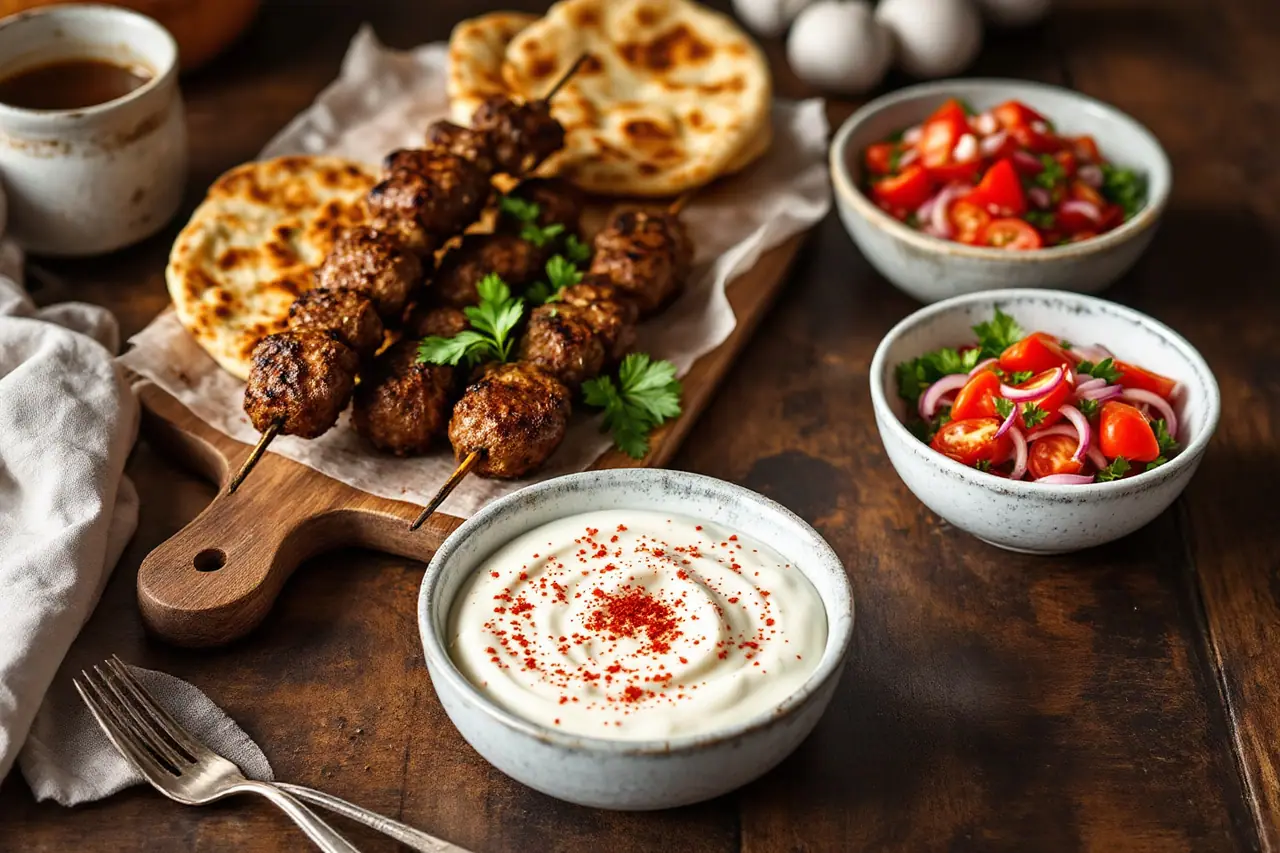
Kofta is less a recipe than a family. The word, and its cousins köfte, kefta, kufta and kofte, covers seasoned ground meat shaped into balls, patties or long fingers, cooked across the Middle East, Turkey, the Balkans, Iran, North Africa and South Asia. In some kitchens kofta are simmered in a sauce; in others they are fried; on a grill they are usually pressed around flat skewers and cooked over a hot fire until the outside chars and the inside stays juicy. Each region, and honestly each family, has its own spice blend.
This is the version I make most often, the one I cook for friends on a summer evening in my backyard, the grill doing the work while everyone hovers. It is lamb, grated onion, garlic, parsley, mint and a warm mix of cumin, coriander, paprika and a little cinnamon. It is my own home version, built from a lot of other people's, and it bends easily to whatever you have.
The meat
Ground lamb is the classic choice and the one I like best. It has plenty of fat, which keeps kofta juicy over a hot fire, and its flavor stands up to bold spices. Lamb shoulder, ground, is ideal. If lamb is not your thing, or not in the store, half lamb and half 80/20 beef is very good, and all beef works too, as long as it is not lean.
Fat matters more here than in a meatball that simmers in sauce. A kofta on the grill has nothing protecting it; lean meat turns dry and crumbly in minutes. Aim for something around 20 percent fat.
Keep the meat cold. Cold fat stays in the meat instead of smearing out, and cold mix holds onto the skewer much better.
Onion, herbs and spices
Grate the onion on the large holes of a box grater, then squeeze it hard in your hands or a towel to get rid of most of the juice. This is important for kofta on skewers: watery onion makes the mix slide right off. You keep all the flavor and lose the water.
Parsley is the main herb, chopped fine, with some fresh mint. Garlic, grated. For the spices, my blend is ground cumin, ground coriander, sweet paprika, a little cinnamon, black pepper, a pinch of chili flakes or Aleppo pepper if you have it, and salt. Some cooks add allspice or a little sumac; some use a ready-made baharat blend. Toasting whole cumin and coriander seeds and grinding them yourself gives a deeper flavor, but ground spices from a jar that is less than a year old are fine.
Add everything to the meat and mix for a bit longer than you would for a tender meatball, about a minute of kneading. That is a deliberate difference. Kofta on a skewer need a slightly sticky, bound texture, closer to a sausage, so they hold together as they cook and as you turn them. Then chill the mix for at least 30 minutes.
Skewers, logs or balls
There are three ways to shape them, and all three are good.
The classic grilled kofta is pressed onto skewers, and it is the way I like most. Flat metal skewers are best; the meat grips the flat blade and does not spin when you turn it. Take about 70 g of mix, squeeze it into a sausage shape around the skewer with wet hands, and press it evenly along the blade into a log about 5 inches (13 cm) long and an inch (2.5 cm) thick. Pinch the ends so they hold. Round bamboo skewers work if you soak them for 30 minutes first, but the meat is more likely to slip as you turn it.
The other two shapes are easier: roll the mix into logs without skewers and grill them on a well-oiled grate or in a grill pan, turning carefully with tongs, or roll it into balls of about 30 g and broil, roast or fry them like meatballs.
A worked example for planning: 2 pounds (900 g) of lamb plus onion, herbs and spices gives about 1,050 g of mix. At 70 g per skewer that is 15 kofta, enough for six people with flatbread and salads. As balls of 30 g you will have about 35, good for a party platter with the yogurt sauce for dipping.
On the grill
Get the grill hot, medium-high, and oil the grates well. Kofta stick to a dirty or dry grate and tear when you try to turn them. Grill them over direct heat for about 8 to 10 minutes in total, turning every 2 minutes or so, until they are well browned and charred in places. Do not move them for the first two minutes; let a crust form so they release.
They are done when an instant-read thermometer in the thickest part reads 160°F (71°C). At an inch thick, this happens quickly, and kofta taste best right at that point, juicy and just firm.
Broiling or a grill pan
Indoors, the broiler does a very good job. Line a sheet pan with foil, set a wire rack on it, oil the rack, and lay the kofta (on skewers or not) on top. Broil about 4 inches (10 cm) from the heat for 8 to 12 minutes, turning once or twice, until browned and at 160°F (71°C) inside. A heavy grill pan over medium-high heat works too; give the kofta 2 to 3 minutes per side and turn them carefully.
If you are cooking balls, roast them at 425°F (220°C) for 12 to 15 minutes.
Garlic yogurt
The sauce is the cool counterpart to all that smoke and spice. Thick plain yogurt (Greek-style or labneh loosened with a little water), grated garlic, lemon juice, salt and a little olive oil, with chopped mint or dill if you like. Make it first and let it sit; the garlic mellows into it. A sprinkle of paprika or sumac on top looks good and tastes better.
The recipe
Grilled lamb kofta with garlic yogurt
- Makes
- About 15 skewers, serves 6
- Prep
- 30 min
- Cook
- 12 min
- Total
- 42 min
Ingredients
Kofta
- 1 medium1 medium (about 150 g) yellow onion, coarsely grated and squeezed dry
- 3 cloves garlic, grated
- 2/3 cup25 g flat-leaf parsley, finely chopped
- 2 tbsp fresh mint, finely chopped
- 2 tsp ground cumin
- 1 1/2 tsp ground coriander
- 1 1/2 tsp sweet paprika
- 1/2 tsp ground cinnamon
- 1/2 tsp black pepper
- 1/2 tsp Aleppo pepper or chili flakes
- 2 tsp2 tsp (about 10 g) fine salt
- 2 lb900 g ground lamb, or half lamb and half 80/20 beef
- 1 tbsp15 ml olive oil, for the grill or rack
Garlic yogurt
- 1 1/2 cups360 g thick plain yogurt (Greek-style)
- 1 small clove garlic, finely grated
- 1 tbsp15 ml lemon juice
- 1 tbsp15 ml olive oil
- 1/2 tsp fine salt
- 1 tbsp chopped mint or dill, plus paprika to finish
To serve
- 6 flatbreads or pitas, warmed
- 1 bowl tomato, red onion and parsley salad with lemon and sumac
Method
- If using bamboo skewers, soak 15 of them in water for 30 minutes. Flat metal skewers need no soaking.
- Make the yogurt sauce: stir together the yogurt, garlic, lemon juice, olive oil, salt and herbs. Refrigerate.
- In a large bowl, combine the squeezed onion, garlic, parsley, mint, all the spices and the salt.
- Add the lamb and knead with your hands for about 1 minute, until the mix turns slightly sticky and well bound. Chill for 30 minutes.
- With wet hands, take about 70 g of mix and press it around a skewer into an even log about 5 inches (13 cm) long. Pinch the ends. Repeat.
- Heat a grill to medium-high and oil the grates well, or heat the broiler with an oiled rack set over a foil-lined pan.
- Grill the kofta over direct heat for 8 to 10 minutes, turning every 2 minutes, without moving them for the first 2 minutes. Under the broiler, cook 4 inches (10 cm) from the heat for 8 to 12 minutes, turning once or twice.
- Check that the thickest kofta reads 160°F (71°C), then rest them for 3 minutes.
- Serve with warm flatbread, the garlic yogurt dusted with paprika, and the tomato and onion salad.
Cook's notes
- For balls instead of skewers, roll 30 g portions and roast at 425°F (220°C) for 12 to 15 minutes.
- The shaped kofta can be made a day ahead and kept covered in the fridge, or frozen on a tray and bagged.
A spice jar for kofta nights
If kofta become a habit, mix the dry spices in a bigger batch and keep them in a small jar. My ratio is easy to remember: four parts cumin, three parts coriander, three parts sweet paprika, one part cinnamon, one part black pepper and one part Aleppo pepper. Two tablespoons of the blend seasons two pounds (900 g) of meat, with the salt added separately so you can adjust it. The same jar seasons roasted chickpeas, a pan of lamb chops, or a spoonful stirred into yogurt for a quick marinade for chicken thighs. Keep it away from the stove and use it within a few months, while it still smells strongly when you open the lid.
Keeping kofta on the skewer
The most common kofta problem is meat sliding off the skewer, usually just as you turn it over the fire. Here is what prevents it.
- Squeeze the onion dry. Wet onion is the number one cause.
- Knead the mix a little and chill it well. Cold, bound meat grips the skewer.
- Use flat skewers. Round ones let the meat spin.
- Press firmly and evenly. Thin spots break; thick ones stay raw.
- Oil the grill, wait for the crust, then turn. A kofta that sticks will tear.
If one does fall off, cook it anyway. Nobody will complain.
What to serve with kofta
Warm flatbread or pita, the garlic yogurt, and a salad of chopped tomato, cucumber, red onion and parsley with lemon, olive oil and a pinch of sumac. Rice or bulgur pilaf turns it into a bigger meal. Hummus, pickled vegetables, grilled peppers and a chopped herb salad all belong on the same table. For a crowd, I put everything out and let people build their own wraps.
Leftovers
Cooked kofta keep for 3 days in the fridge. Reheat them in a hot skillet or a 375°F (190°C) oven until they reach 165°F (74°C) in the center, or eat them cold, sliced into a wrap with yogurt and salad, which I think is better.
If you enjoy shaping meat by hand, the classic meatball method shows the opposite approach, a soft panade mix that stays tender in sauce, and the falafel recipe pairs beautifully with kofta on the same table. More shapes and spices are in the meatball kitchen.
Questions people ask
Can I make kofta with ground beef only?
Yes. Use 80/20 beef, not lean, and keep the same spices. Beef kofta are a little milder.
Why are my kofta dry?
The meat was too lean or they were cooked past 160°F (71°C). Use meat with about 20 percent fat and check with a thermometer.
Can I bake kofta?
Yes. Roast them on a rack set over a sheet pan at 425°F (220°C) for about 15 minutes for logs, a little less for balls. They will brown but not char.

Diego Salazar
Diego cooks from his grandmother's kitchen in San Antonio and from the tapas bars he fell for on a long trip through Spain. He writes about albondigas, croquetas, kofta off the grill, falafel and spice, and about feeding a crowd without fuss.
Cook next
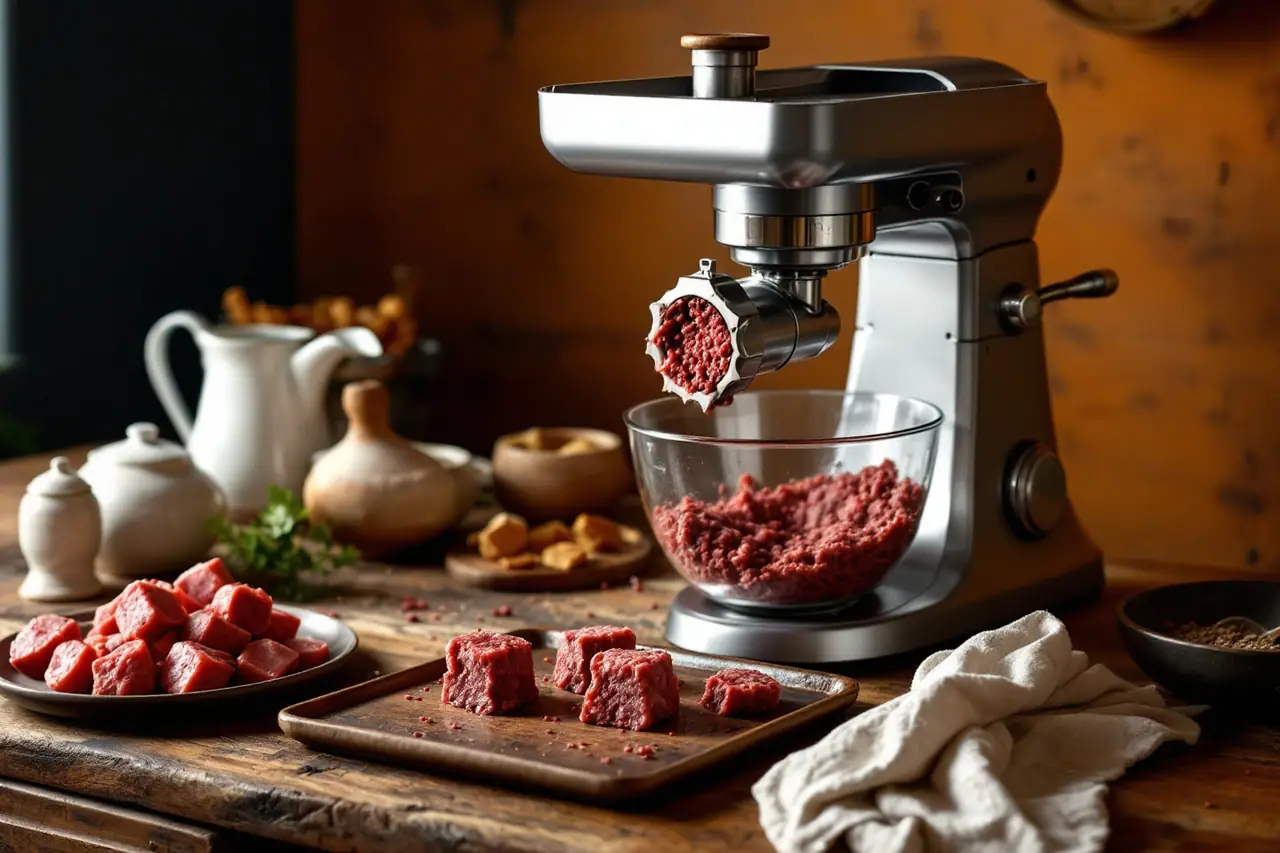
KitchenAid meat grinder attachment: grinding your own meatball mix
How a stand mixer grinder attachment works, which cuts to grind for meatballs, chilling and fat ratios, cleaning, and when a standalone meat grinder makes more sense.
Cook this one →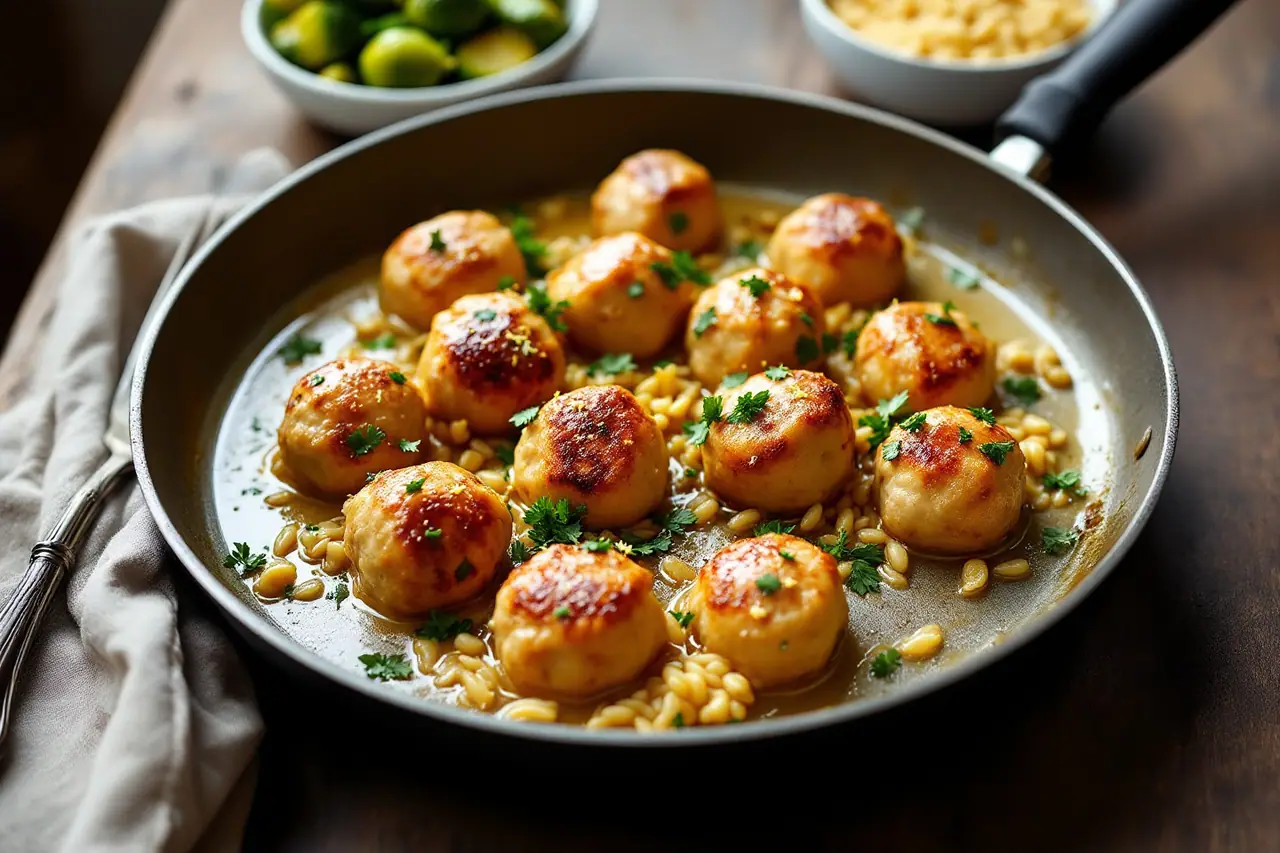
Chicken meatballs with lemon and parmesan, in a pan sauce
Tender chicken meatballs with lemon zest, garlic, parsley and parmesan, roasted hot and tossed in a quick lemon butter sauce. Weeknight timings and lunchbox leftovers.
Cook this one →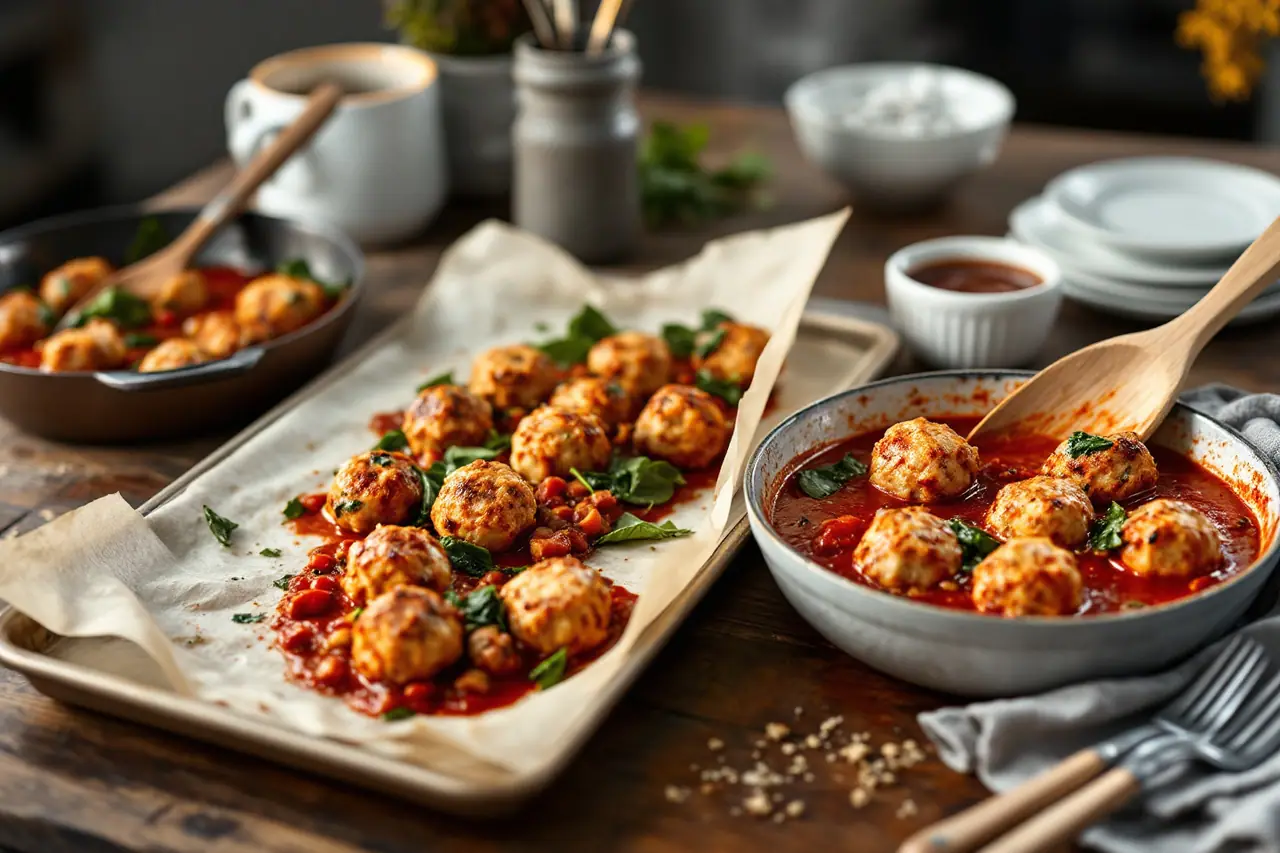
Turkey meatballs that stay juicy, for busy weeknights
Why ground turkey turns dry and the fixes that stop it: dark meat, a bread paste, grated onion, a quick roast and a short simmer. Mild for kids, spicy for adults.
Cook this one →