
Falafel recipe from dried chickpeas, fried or baked
Crisp, green-flecked falafel made the traditional way from soaked dried chickpeas and herbs, with a deep-fried method, an oven version, and tahini sauce.
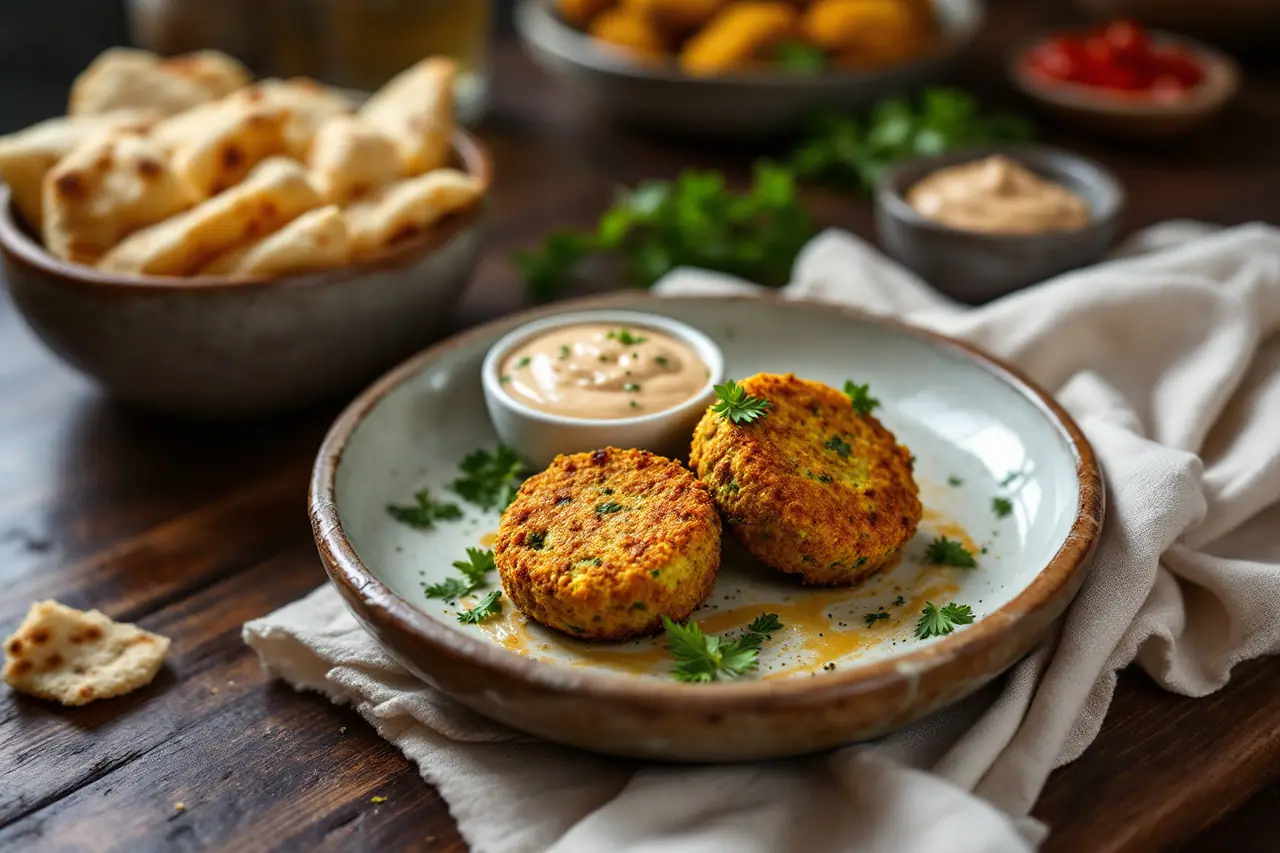
I came to falafel late, and through the wrong door. For years I made it from canned chickpeas, wondered why it fell apart in the oil, and added flour until it held together and tasted like a dense chickpea biscuit. The fix, when I finally learned it, was almost insultingly simple: use dried chickpeas, soaked overnight, and never cook them before they go into the mix.
That is the whole secret. Everything else in this recipe is detail, and good detail, but if you take one thing away it is the soak. Below is how I make falafel at home now, with a deep-fried method for the crisp, craggy version, an oven method for weeknights, and the tahini sauce that goes with both.
What is falafel?
Falafel are fritters made from ground legumes, herbs, onion and spices, shaped into balls or patties and fried. They are eaten all over the Middle East, from Lebanon, Syria, Palestine, Israel and Jordan to the Gulf, usually tucked into pita or flatbread with salad, pickles and a sauce. In Egypt, where many food historians place their origin, the everyday version is made with dried fava beans and called ta'ameya; it is greener and softer inside. The chickpea version below is the one most people outside the region know. It is one home version among many, and every family I have cooked with has its own ratio of herbs and spices.
Why dried chickpeas, never canned
Canned chickpeas are cooked. Cooking gelatinizes the starch, so when you grind them you get a smooth, wet paste with no structure. That paste needs flour or egg to hold together, and even then it tends to soften and burst in hot oil.
Dried chickpeas that are soaked but still raw grind into a coarse, slightly damp crumb. Their raw starch binds the mix as it fries, the outside sets into a crust, and the inside stays light and fluffy. You need no flour at all, or at most a spoonful as insurance.
Soak the chickpeas in plenty of cold water, with room to double in size, for 12 to 24 hours. They should be swollen and easy to bite through, though still raw and crunchy. A little baking soda in the soaking water is optional; it softens them a bit faster. Drain them well and pat them dry with a towel. Water left on the chickpeas is the main reason a falafel mix turns wet.
Food processor or grinder
The texture you want is coarse and sandy, like wet couscous or damp sand, with no whole chickpeas and no smooth paste. How you get there depends on your machine.
A food processor is what most of us use. Work in batches if your bowl is small, so the blade can move the chickpeas around instead of packing them against the sides. Add the onion, garlic and herbs with the chickpeas, then pulse in short bursts, scraping down the bowl every few pulses. Stop as soon as the mix holds together when you squeeze a handful. If you run the machine continuously, you will end up with hummus, and hummus does not fry.
An old-fashioned meat grinder, hand-cranked or a stand mixer attachment, does an excellent job too, and many cooks in the region swear by it. Pass the chickpeas and aromatics through a medium plate once, or twice for a finer texture. The grinder cuts rather than smashes, which gives a lovely even crumb.
Either way, the mix should look speckled green from the herbs and feel damp but not wet. Squeeze a little in your fist: it should hold its shape and crumble only slightly when you open your hand.
Herbs, spices and the baking soda
The herbs are generous: a big handful each of flat-leaf parsley and cilantro, stems included (the stems carry plenty of flavor). Some cooks add a little fresh mint or dill. The onion goes in raw, and so does the garlic.
For spices I use ground cumin and coriander, a pinch of cayenne, salt and black pepper. Some families add cardamom or a little allspice; others keep it to cumin alone.
Add the salt and the baking soda just before shaping, not at the start. Salt draws water out of the mix if it sits, and baking soda starts working once it meets moisture. A small amount, about half a teaspoon for a batch of this size, lightens the inside and helps the falafel turn a deep brown. Sesame seeds pressed onto the outside are a nice touch, and traditional in some places.
Chill the mix for at least 30 minutes. Cold falafel mix holds its shape better and absorbs less oil.
Shaping
Use wet hands, two spoons, or a small portion scoop. A falafel scoop (a little tool with a lever) makes neat flat-topped discs, but you do not need one. I roll balls of about 25 g, a bit smaller than a golf ball, then flatten them slightly, which helps them cook through before the outside gets too dark.
A batch made with about 1 1/2 cups (300 g) of dried chickpeas gives roughly 900 g of mix, which makes about 35 falafel at 25 g each. That feeds four to six people as pita sandwiches.
Frying, the classic way
Deep frying gives the real thing: a deep brown, craggy crust and a fluffy, steaming inside. Use a heavy, deep pot and at least 2 inches (5 cm) of neutral oil, heated to 350°F (175°C). Check the temperature with a thermometer, because falafel are sensitive to it: oil that is too cool makes them greasy and soft, and oil that is too hot browns the outside while the middle stays raw and pasty.
Fry a test falafel first. If it falls apart, the mix is too wet; stir in a tablespoon of chickpea flour or plain flour, chill it again, and try another. If it holds, fry the rest in batches of five or six without crowding, for 3 to 4 minutes, turning once, until deep golden brown all over. Drain on a wire rack set over a sheet pan, not on paper towels where the bottoms steam.
Baked falafel
Baked falafel are not the same as fried ones, and I will not pretend otherwise. They are drier and less crisp, with a crust that is browned rather than craggy. But they are good, much less trouble, and very welcome on a weeknight.
Heat the oven to 425°F (220°C) with a heavy sheet pan inside. Shape the mix into flatter patties, about 1/2 inch (1.5 cm) thick, because thin shapes bake through before they dry out. Brush the hot pan generously with olive oil, lay the patties on it (they should sizzle), brush their tops with oil, and bake for 12 minutes. Flip, and bake for another 10 to 12 minutes until both sides are deep golden. The oil does a lot of the work here; skimp on it and they turn chalky.
A shallow-fry in a skillet with half an inch of oil is a good middle path: flatten the falafel, fry for about 3 minutes a side, and you get most of the crunch with much less oil.
The recipe
Herb falafel from dried chickpeas
- Makes
- About 35 falafel, serves 4 to 6
- Prep
- 30 min
- Cook
- 25 min
- Total
- 55 min
Ingredients
Falafel
- 1 1/2 cups300 g dried chickpeas, soaked in cold water for 12 to 24 hours (never canned)
- 1 small1 small (about 100 g) yellow onion, roughly chopped
- 4 cloves garlic
- 1 cup packed30 g flat-leaf parsley, leaves and tender stems
- 1 cup packed30 g cilantro, leaves and stems
- 2 tsp ground cumin
- 1 1/2 tsp ground coriander
- 1/4 tsp cayenne pepper
- 1 1/2 tsp1 1/2 tsp (about 8 g) fine salt
- 1/2 tsp black pepper
- 1/2 tsp baking soda
- 1 tbsp sesame seeds (optional)
- about 6 cupsabout 1.5 liters neutral oil for deep frying (or olive oil for baking)
Tahini sauce
- 1/2 cup120 g tahini, well stirred
- 3 tbsp45 ml lemon juice
- 1 small clove garlic, grated
- 1/2 tsp fine salt
- about 1/2 cupabout 120 ml ice water
To serve
- 6 pita breads, warmed
- as you like chopped tomato and cucumber, pickled turnips or cucumbers, shredded lettuce
Method
- Drain the soaked chickpeas well and pat them dry with a clean towel.
- Put the chickpeas, onion, garlic, parsley and cilantro in a food processor (in two batches if it is small) and pulse in short bursts, scraping down often, until the mix looks like damp coarse sand and holds together when squeezed. Do not purée.
- Tip into a bowl and stir in the cumin, coriander, cayenne and black pepper. Cover and chill for 30 minutes to 2 hours.
- Meanwhile, whisk the tahini, lemon juice, garlic and salt, then whisk in ice water a spoonful at a time until smooth and pourable.
- Just before shaping, stir the salt and baking soda into the falafel mix.
- Shape into balls of about 25 g with wet hands or a small scoop, flatten them slightly, and press a few sesame seeds onto each if using.
- To fry: heat 2 inches (5 cm) of oil in a heavy pot to 350°F (175°C). Fry one test falafel; if it breaks up, stir 1 tablespoon of flour into the mix and chill again.
- Fry in batches of 5 or 6 for 3 to 4 minutes, turning once, until deep golden brown. Drain on a wire rack and keep the oil at 350°F (175°C) between batches.
- To bake instead: heat the oven to 425°F (220°C) with an oiled sheet pan inside. Shape the mix into patties 1/2 inch (1.5 cm) thick, place them on the hot pan, brush with olive oil and bake for 12 minutes, flip, and bake 10 to 12 minutes more.
- Serve hot in warm pita with the salad, pickles and tahini sauce.
Cook's notes
- The raw mix (without the salt and baking soda) keeps for 2 days in the fridge, or freezes for a month.
- Tahini thickens before it thins when water goes in; keep whisking and it will turn smooth.
Tahini sauce and the rest of the sandwich
Tahini sauce is tahini, lemon, garlic, salt and water. The water does something odd: the first spoonfuls make the tahini seize into a thick, stiff paste, and then, as you keep whisking in more, it suddenly loosens into a smooth, pale sauce. Ice water gives the creamiest result. Taste it for lemon and salt; it should be bright.
For sandwiches, split warm pita, add three or four falafel, crush them lightly, then pile on chopped tomato and cucumber, a few pickles (pink pickled turnips if you can find them), shredded lettuce and plenty of sauce. A spoonful of hot sauce or zhug is welcome. Falafel also make a good plate with hummus, salad and rice, or a party snack with the sauce for dipping.
Storing, freezing and reheating
Cooked falafel are best within an hour of frying. They can be refrigerated for 3 days and reheated in a 375°F (190°C) oven or an air fryer for 6 to 8 minutes, which brings back much of the crunch. A microwave makes them soft.
The uncooked mix freezes well. Freeze it in a bag pressed flat, or shape the falafel, freeze them on a tray, then bag them. Fry from frozen at 350°F (175°C), adding about a minute, or thaw the mix overnight in the fridge and add the salt and baking soda before shaping.
Troubleshooting
- Falling apart in the oil: the mix is too wet or too finely ground. Dry the chickpeas better, pulse less, add a spoon of flour, and chill.
- Raw and pasty in the middle: the oil was too hot, or the falafel too big. Lower the heat and make them smaller or flatter.
- Greasy: the oil was too cool, or the pot was crowded and the temperature dropped. Fry fewer at a time.
- Bland: falafel need more salt and spice than you think; the herbs and chickpeas soak it up. Taste a test one.
If you already like making meatballs, you will find the rhythm familiar: a mix that has to be the right dampness, gentle shaping with wet hands, and a test piece before the whole batch. The classic meatball method explains that test patty habit, and the fritters kitchen collects more things that meet hot oil.

Diego Salazar
Diego cooks from his grandmother's kitchen in San Antonio and from the tapas bars he fell for on a long trip through Spain. He writes about albondigas, croquetas, kofta off the grill, falafel and spice, and about feeding a crowd without fuss.
Cook next
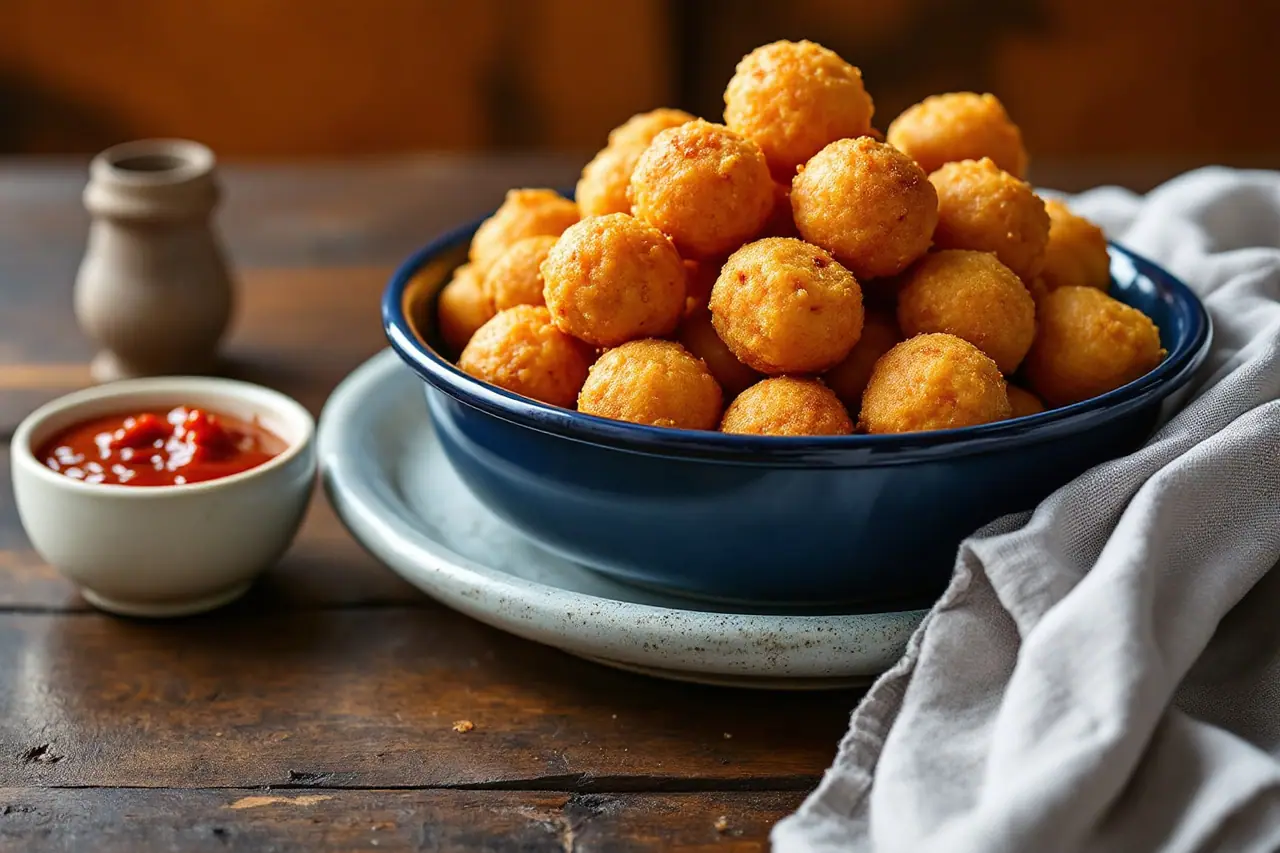
Akara: crisp black-eyed pea fritters, the way my mother made them
Light, crisp akara made from peeled black-eyed peas whipped with onion and hot pepper, fried by the spoonful. How to peel the beans, whip the batter and serve them.
Cook this one →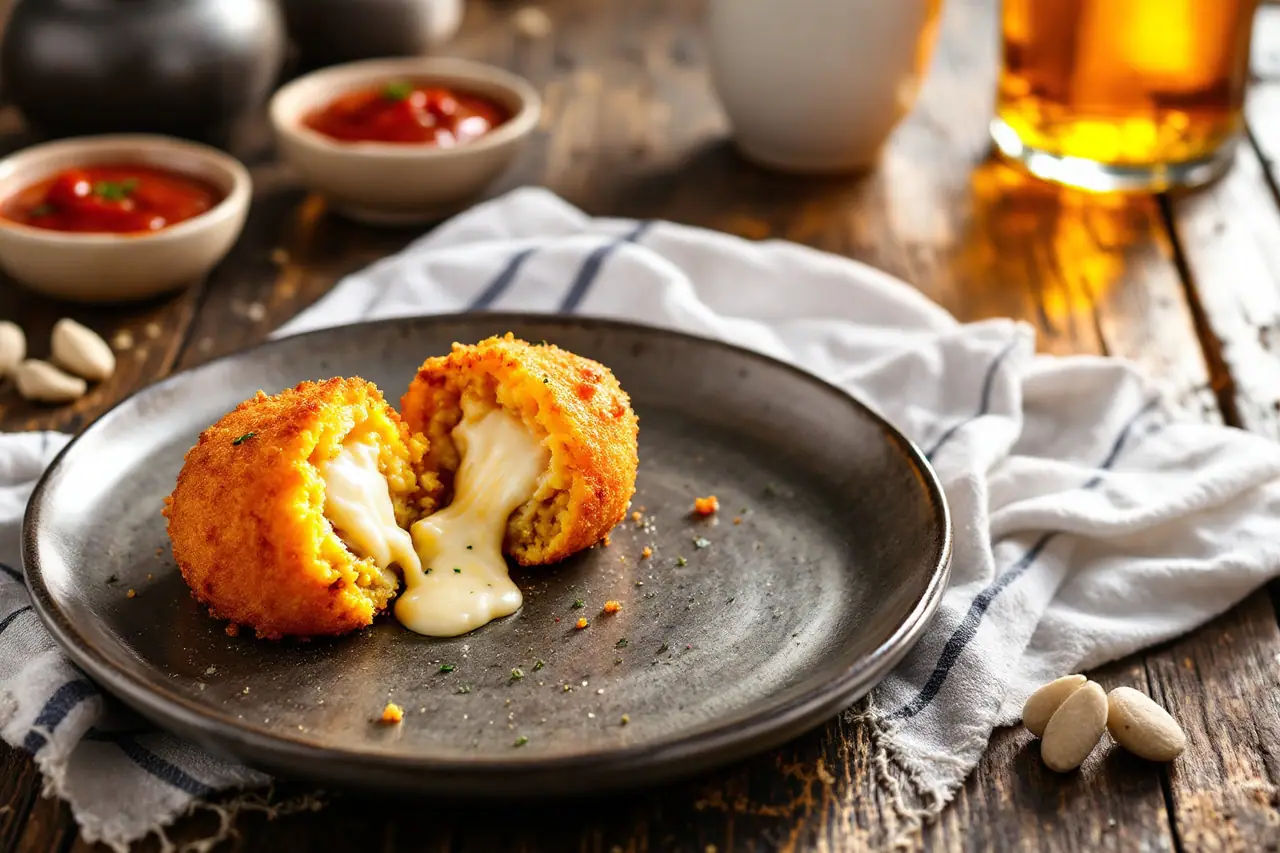
Arancini from leftover risotto, with a melting middle
Sicilian-style rice balls made from cold risotto, stuffed with mozzarella or ragù, rolled in breadcrumbs and fried crisp, plus a baked version and a quick risotto.
Cook this one →