
Kitchen Know-howMeatballs & Polpette
KitchenAid meat grinder attachment: grinding your own meatball mix
How a stand mixer grinder attachment works, which cuts to grind for meatballs, chilling and fat ratios, cleaning, and when a standalone meat grinder makes more sense.
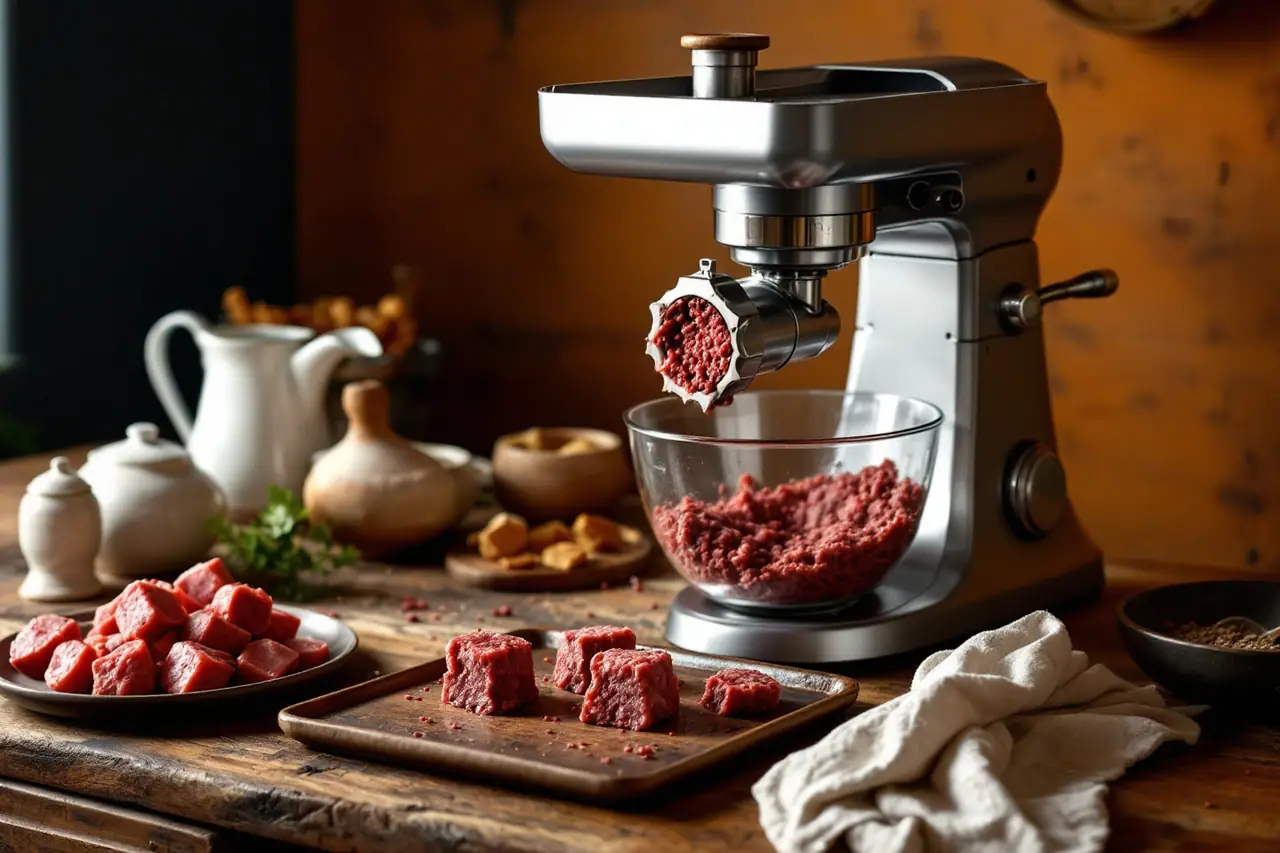
For years I bought ground meat like everyone else, and my meatballs were good. Then a friend lent me the grinder attachment for her stand mixer, I ground a pork shoulder and a piece of chuck one Saturday morning, and the meatballs that Sunday were noticeably better. Looser, more tender, with a clean, meaty flavor and exactly the amount of fat I had chosen. I bought my own attachment the following week.
Grinding your own meat is not necessary for good meatballs. But if you make them often, it gives you control over three things that store-bought ground meat decides for you: the cut, the fat, and the coarseness of the grind. This guide explains how a stand mixer grinder attachment works, which cuts to buy, how to keep everything cold, how to clean it, and when a standalone grinder is the better buy.
How the attachment works
KitchenAid stand mixers have a power hub at the front of the motor head, usually under a small cap. The food grinder attachment slots into that hub and is driven by the mixer's motor. Inside the attachment is a screw (the auger) that pushes the meat forward against a rotating blade and through a perforated metal plate. The size of the holes in the plate decides how fine the grind is.
There are two kinds you will see. The older food grinder attachment is mostly made of plastic. The newer metal food grinder attachment is made of metal, which has two advantages for meat: it is sturdier, and you can chill the whole thing in the freezer before you start, which keeps the meat cold as it goes through. Attachments typically come with two or three plates (fine, medium and coarse) and often sausage stuffer tubes, but the exact contents vary, so check the box and your manual.
The attachment works on any speed setting, but you will get the best results at a medium speed, which the manual will suggest. Too slow and the meat smears; too fast and it heats up.
Which cuts to grind
This is the fun part. Ground meat from a supermarket is often made from trimmings, and the fat percentage on the label is an average. When you grind your own, you choose.
For beef, buy chuck. Chuck roast has a good balance of lean meat and fat, usually around 15 to 20 percent fat once trimmed of the big pieces of gristle, which is exactly the range you want for meatballs. Brisket point and short rib meat are richer; sirloin is too lean on its own.
For pork, buy shoulder, sometimes sold as pork butt or Boston butt. It is well marbled, inexpensive, and has around 20 to 25 percent fat. It is the classic sausage cut for a reason.
For lamb, buy shoulder too. Lamb shoulder makes superb kofta and keftedes.
For veal, if you want the traditional three-meat mix, ask the butcher for veal shoulder.
A worked example for a family batch of my Sunday meatballs: buy about 1 1/2 pounds (680 g) of chuck and 3/4 pound (340 g) of pork shoulder. After trimming off gristle and silver skin you will have roughly 1 1/3 pounds (600 g) of beef and 2/3 pound (300 g) of pork, the amounts the recipe calls for, at around 20 percent fat overall. If you want to adjust the fat, keep some trimmed fat aside and add it back by eye.
Keep everything cold
Cold is the single most important thing in grinding. Warm fat smears instead of being cut cleanly, and smeared fat gives you a pasty, greasy grind and dense meatballs. Here is the routine.
- Put the metal attachment parts (body, auger, blade, plate, ring) in the freezer for at least 30 minutes, or the fridge for an hour if your attachment is plastic and the manual says not to freeze it.
- Cut the meat into cubes of about 1 inch (2.5 cm), trimming out tough gristle and silver skin as you go. Gristle wraps around the blade and clogs the plate.
- Spread the cubes on a sheet pan and put them in the freezer for 20 to 30 minutes, until they are firm and stiff at the edges but not frozen solid.
- Set a bowl under the grinder, sitting in a larger bowl of ice if your kitchen is warm.
Grind straight from the freezer, a handful at a time, using the pusher rather than your fingers. If the meat starts to come out smeared rather than in neat strands, stop, put everything back in the freezer for 10 minutes, and carry on.
One grind or two
For meatballs, I grind once through the coarse or medium plate. That gives a looser texture that holds plenty of juice. For a finer, more delicate meatball, like Swedish meatballs or soup meatballs, grind once through the coarse plate, chill again for 10 minutes, then grind a second time through the fine plate.
Mix the beef and pork together after grinding, not before, so you can check the balance. Or, for a very even mix, toss the cubes of both meats together before grinding.
At the end, push a slice of bread through the grinder. It pushes out the last bit of meat trapped in the auger and makes cleaning easier. The bread goes into the meatball panade, so nothing is wasted.
Other mixes worth grinding
Lamb shoulder for kofta, on its own or with a little beef. Pork shoulder with garlic and fennel for a sausage-style meatball. Chicken thighs, skinless, chilled very cold, for chicken meatballs; they are softer and need the freezer step even more. Whatever the cut, the rule is the same: trim the gristle, cube, chill hard, grind cold.
Food safety when you grind at home
Freshly ground meat has more surface exposed than a whole cut, so treat it carefully.
- Keep the meat refrigerated until the moment you cube it, and cook or refrigerate it right after grinding.
- Wash your hands, the board, the knife and the attachment parts in hot soapy water afterwards.
- Cook home-ground beef, pork, lamb and veal to 160°F (71°C), and poultry to 165°F (74°C), checked with a thermometer in the center of a meatball.
- Use home-ground meat within a day or two, or freeze it.
Cleaning the attachment
Take it apart as soon as you finish, before anything dries on. Push the bread through first, then disassemble the ring, plate, blade, auger and body. Scrape out the meat, then wash everything in hot soapy water with a small brush (one often comes in the box) to clear the plate holes.
Metal attachments are usually hand-wash only; the dishwasher can discolor or dull them. Dry every part immediately and thoroughly, including inside the body, because damp metal parts can rust or discolor. Some plastic attachments are dishwasher-safe; check your manual before you put any part in. A light film of food-safe oil on the blade and plate before storage keeps them in good shape.
Choosing an attachment or a standalone grinder
If you already own a KitchenAid stand mixer, the attachment is the obvious place to start. It uses the motor you already have, takes up little space, and grinds a few pounds of meat at a time easily, which covers most home meatball batches. Here is what to think about.
- Metal or plastic. Metal is sturdier and can be chilled in the freezer, which really helps with meat. Plastic is lighter, less expensive and in some cases dishwasher-safe.
- Plates. Coarse and fine plates cover meatballs and sausage. A medium plate is a bonus for burgers.
- Fit. KitchenAid attachments are designed to fit the power hub on its stand mixers, but always check the attachment's compatibility with your mixer model.
- Volume. If you grind several pounds at a time, or often, a mixer attachment will be slow, and the mixer motor works hard for a long stretch. That is when a standalone electric meat grinder makes sense: a dedicated, larger motor, a bigger feed tube, and faster throughput for big batches or regular sausage making.
- Space and frequency. A standalone grinder is a bulky machine. If you will grind once a month, the attachment wins.
My honest advice: start with the attachment, use it for a few months, and only buy a standalone grinder if you find yourself grinding large amounts regularly.
The recipe
Home-ground beef and pork meatball blend
- Makes
- About 2 lb (900 g) of ground meat, enough for 25 meatballs
- Prep
- 50 min
- Cook
- 0 min
- Total
- 50 min
Ingredients
To grind
- 1 1/2 lb680 g beef chuck, trimmed to about 1 1/3 lb (600 g)
- 3/4 lb340 g boneless pork shoulder, trimmed to about 2/3 lb (300 g)
- 1 slice white bread, to push the last meat through
Method
- Put the metal grinder parts in the freezer for at least 30 minutes, or follow your manual for a plastic attachment.
- Trim the gristle and silver skin from the beef and pork and cut the meat into 1 inch (2.5 cm) cubes.
- Spread the cubes on a sheet pan and freeze for 20 to 30 minutes, until firm at the edges but not frozen through.
- Assemble the cold attachment with the coarse plate, fit it to the mixer hub, and set a chilled bowl underneath.
- Run the mixer at the medium speed your manual recommends and feed the cubes in a handful at a time with the pusher.
- If the meat smears instead of coming out in clean strands, stop and chill everything for 10 minutes.
- For a finer texture, chill the ground meat for 10 minutes and grind it again through the fine plate.
- Push the slice of bread through to clear the auger, then refrigerate the meat and use it within 1 to 2 days.
- Take the attachment apart at once, wash the parts in hot soapy water, and dry each one thoroughly.
Cook's notes
- Use the bread that comes out at the end in your meatball panade.
- Cook home-ground beef and pork to 160°F (71°C) in the center.
Questions people ask
Is grinding your own meat worth it for meatballs?
If you make meatballs often, yes. You choose the cut and the fat, the texture is looser and more tender, and it can cost less than premium ground meat. For an occasional batch, good store-bought 80/20 beef is fine.
Can I grind meat in a food processor instead?
You can pulse chilled cubes in a food processor, in small batches, for a coarse chop. It works, but the texture is less even than a grinder's, and it is easy to overdo it into paste.
Why is my ground meat coming out mushy?
The meat or the parts got too warm, or gristle clogged the plate. Chill everything again, trim more carefully, and clear the plate.
Can I put the metal attachment in the dishwasher?
Usually not. Most metal grinder parts are hand-wash only and should be dried right away. Check the manual for your model.
The rest of the gear I find useful for round food is in the tool drawer, and the cooking side of all this, from panade to sauce, lives in the meatball kitchen.

Gianna Russo
Gianna grew up rolling meatballs at a crowded Sunday table in New Jersey and still makes the sauce the long way when she has an afternoon free. She writes the Italian-American pieces here: polpette, arancini, ricotta, grinding your own mix and the sauces that hold it all together.
Cook next

Chicken meatballs with lemon and parmesan, in a pan sauce
Tender chicken meatballs with lemon zest, garlic, parsley and parmesan, roasted hot and tossed in a quick lemon butter sauce. Weeknight timings and lunchbox leftovers.
Cook this one →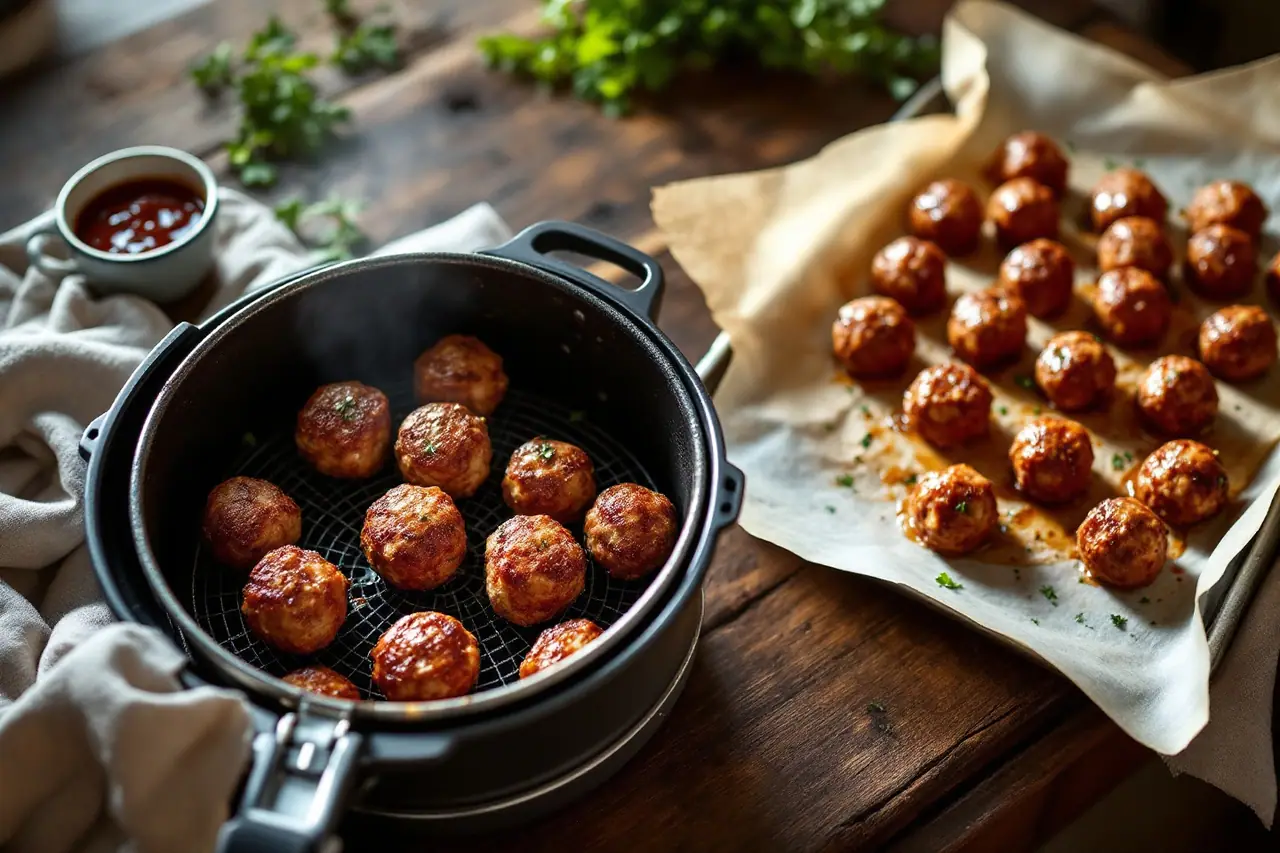
Air fryer meatballs vs oven-baked: times, temperatures, texture
How the air fryer and the oven each cook meatballs, which one browns better, how big a batch each handles, and a table of times and temperatures by meatball size.
Cook this one →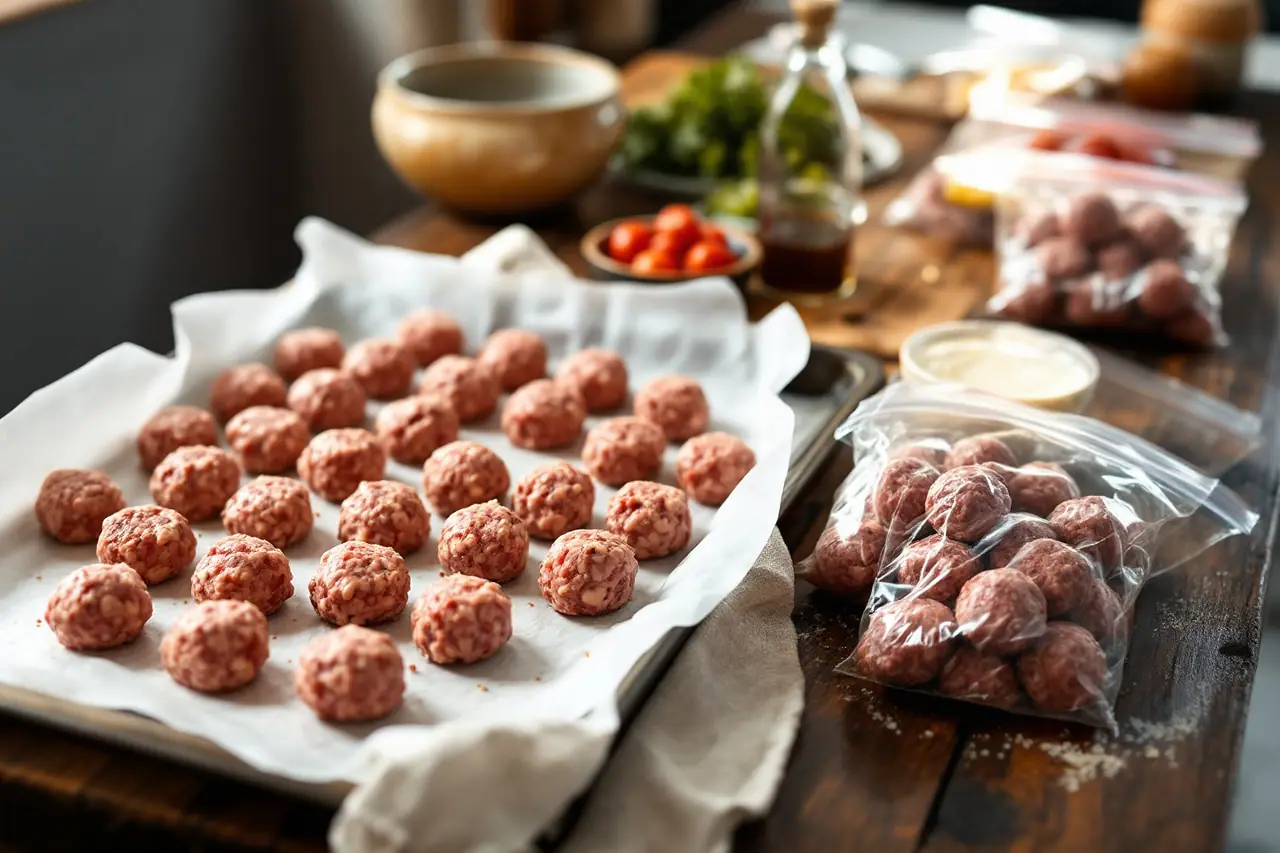
Freezing meatballs, raw or cooked, and cooking them from frozen
Raw or cooked, tray-frozen and bagged: how to freeze meatballs well, how long they keep, and how to cook or reheat them from frozen in the oven, sauce or air fryer.
Cook this one →