
Meatballs & PolpetteSauces & Sides
How to make meatballs that stay tender, in red sauce
The classic beef and pork meatball, step by step: the panade, the salt, a test patty, even sizing, roasting, and a slow finish in a simple tomato sauce.
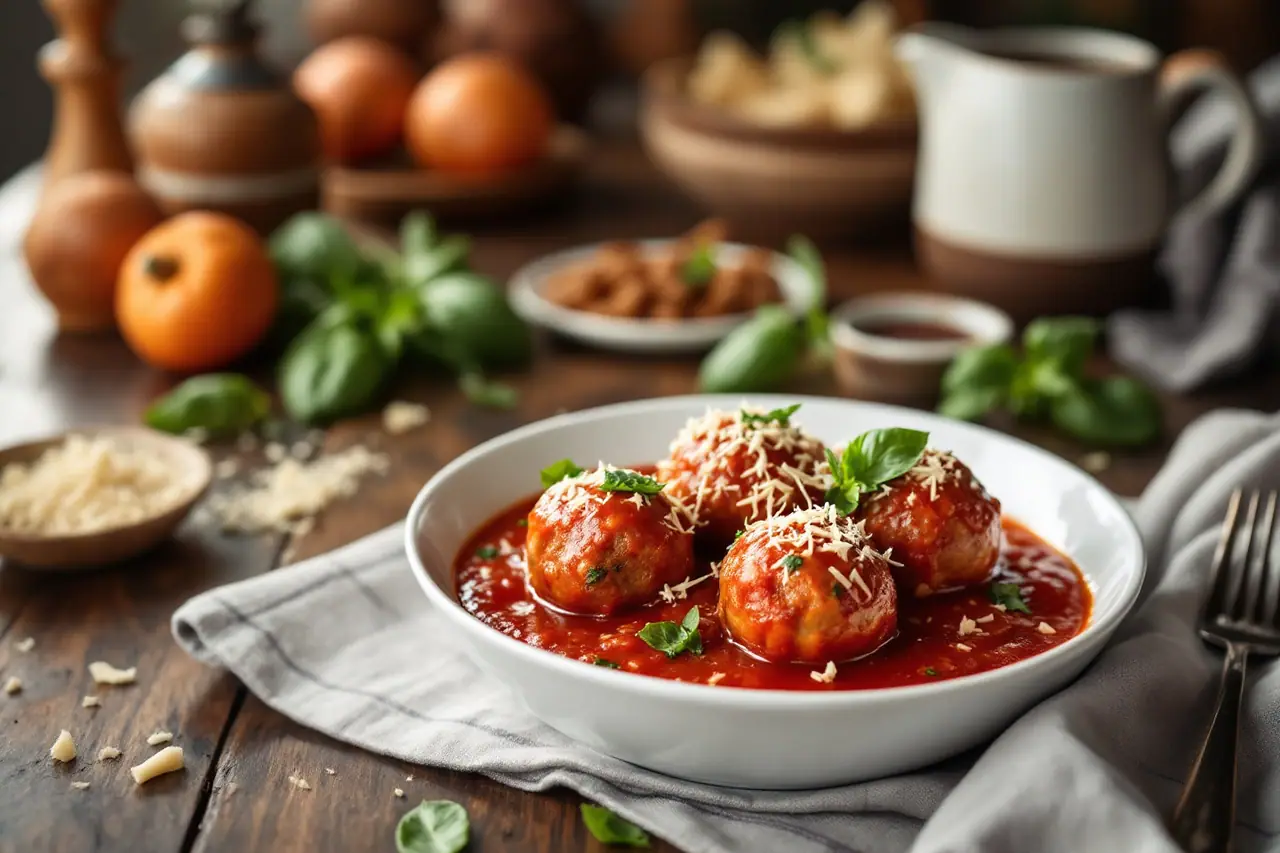
Most meatball recipes look alike on paper. Ground meat, bread, egg, cheese, garlic, a bit of parsley. And yet one tray comes out tender enough to cut with the side of a fork while another bounces off the plate. The difference is almost never a secret ingredient. It is a handful of small decisions about fat, moisture, salt and handling, made in the right order.
This is the meatball I grew up rolling at a crowded Sunday table in New Jersey, written down the way I would explain it to someone standing next to me at the counter. It uses a mix of beef and pork, a milk-soaked bread paste, a generous amount of grated cheese, and a finish in a plain tomato sauce that takes about as long as setting the table and boiling the pasta. Once you have made it twice, you will not need the recipe card, only the habits.
The meat mix
Start with the fat, because fat is what keeps a meatball juicy after it has been cooked through. Very lean beef makes a dry, crumbly meatball no matter what else you do. I use ground beef labeled 80/20 (80 percent lean, 20 percent fat) and add ground pork, roughly two parts beef to one part pork. The pork brings sweetness and a softer texture, and it carries the garlic and cheese well.
You have options. Some families use a three-way mix of beef, pork and veal, which gives a very fine, delicate meatball. Others use all beef, which works if the beef is not too lean. If you can only find 90/10 beef, add more pork to balance it, or add a tablespoon or two of olive oil to the mix. If you grind your own, chuck for the beef and shoulder for the pork are the cuts to ask for, and a coarse grind gives a looser bite.
Keep the meat cold until you are ready to mix. Warm fat smears and makes the mix greasy and dense; cold fat stays in little pockets that melt as the meatball cooks.
Why the bread paste matters
The panade is the part people skip, and it is the part that makes the biggest difference. Torn bread (or dry breadcrumbs) soaked in milk turns into a soft paste. Mixed into the meat, it does two jobs. The starch holds onto moisture that would otherwise squeeze out as the meat proteins tighten in the heat, and the soft bread physically gets in the way of those proteins binding into a tight, springy mass.
Use a sturdy white sandwich bread or a day-old Italian loaf with the crust cut off. Tear it into small pieces, pour the milk over, wait five minutes, then mash it with a fork until there are no dry bits. It should look like porridge. If you only have dry breadcrumbs, use about the same volume and a little more milk, and give them ten minutes.
The egg goes into the paste, not straight onto the meat. Whisking egg, cheese, garlic, parsley and seasoning into the bread first means all of it is evenly spread before the meat goes in, so you need far less mixing afterwards.
Salt, cheese and the test patty
Salt does more than season. It dissolves some of the meat proteins, which helps the meatball hold together, but too much salt or too long a rest after salting can make the texture firm and sausage-like. For two pounds of meat I use about two teaspoons of fine salt, counting the cheese, which is salty too.
The cheese is grated Pecorino Romano, Parmigiano-Reggiano, or a mix. Pecorino is sharper and saltier; Parmigiano is nuttier. A cup of finely grated cheese for two pounds of meat sounds like a lot until you taste the result.
Now the most useful habit in this whole piece: cook a test patty. Pinch off a walnut-sized piece of the finished mix, flatten it, and fry it in a small pan for a minute or two per side. Taste it. Too bland, add salt. Too soft to hold, add a spoonful of breadcrumbs. It takes three minutes, and it saves a whole tray from being under-seasoned.
Mixing without overworking
Mix with your hands, gently, and stop as soon as the bread paste disappears into the meat and you cannot see streaks. Overmixing makes the proteins bind too tightly and the meatballs turn rubbery. Think of folding rather than kneading: lift the meat from the bottom of the bowl, turn it over the paste, press lightly, repeat.
If the mix feels sticky, chill it for 20 minutes before rolling. A cold mix rolls more cleanly and holds its shape in the pan.
Rolling and sizing
Keep a small bowl of cold water next to you and wet your hands before each meatball. Wet palms stop the mix sticking, so you can roll lightly instead of squeezing.
Even sizing matters more than the exact size, because meatballs of the same size cook in the same time. A portion scoop makes this easy, but a kitchen scale works too. Here is the arithmetic for this recipe. Two pounds of meat is about 900 g. Add the bread paste, eggs, cheese and aromatics and the finished mix weighs roughly 1,250 g. At 50 g each, which is a meatball a little bigger than a golf ball, that gives about 25 meatballs, enough for six people with pasta. At 30 g each you would get about 40 smaller meatballs, good for subs or a party, and they cook a few minutes faster.
Roll each portion between your palms with light pressure for a few seconds, just until the surface is smooth. Set them on a parchment-lined sheet pan without touching.
Browning: pan or oven
There are two good ways to give meatballs color before they go into the sauce.
Pan-frying in olive oil gives the deepest crust and leaves flavorful browned bits in the pan. It also takes longer, needs batches, and spatters. Turn the meatballs with tongs every minute or so until browned on most sides; they do not need to be cooked through.
Roasting is what I do on most Sundays. At 425°F (220°C), 50 g meatballs brown well in about 15 minutes. They are not quite as evenly crusted as pan-fried ones, but you can roll the next batch while the first is in the oven, and the kitchen stays cleaner. Brush or drizzle them with a little olive oil first for better color.
Either way, the meatballs finish cooking in the sauce. That gentle simmer is what makes them tender all the way through instead of tight on the outside.
The sauce
This is not an all-day gravy. It is a quick sauce built on good canned tomatoes, which gives the meatballs room to flavor it as they simmer. Whole peeled tomatoes crushed by hand have more body than ready-crushed ones. Cook garlic gently in olive oil until it just turns golden, add the tomatoes and a pinch of salt, and simmer for 15 minutes before the meatballs go in. Basil goes in at the end.
If you have more time, simmer the sauce for an hour with a parmesan rind in it, then add the meatballs. If you have less, the 25-minute version below is still very good.
Checking doneness
Ground beef and pork are safe at an internal temperature of 160°F (71°C). Check with an instant-read thermometer pushed into the center of the largest meatball. After 20 minutes of gentle simmering, 50 g meatballs are usually well past that, but sizes and stoves vary, so check rather than guess.
The recipe
Classic beef and pork meatballs in tomato sauce
- Makes
- About 25 meatballs, serves 6
- Prep
- 35 min
- Cook
- 45 min
- Total
- 1 hr 20 min
Ingredients
Meatballs
- 3 slices3 slices (about 90 g) white sandwich bread or day-old Italian bread, crusts removed
- 1/2 cup120 ml whole milk
- 2 large eggs
- 1 cup90 g finely grated Pecorino Romano or Parmigiano-Reggiano
- 3 cloves garlic, grated or very finely chopped
- 1/3 cup15 g flat-leaf parsley, finely chopped
- 2 tsp2 tsp (about 10 g) fine salt
- 1/2 tsp freshly ground black pepper
- 1 1/3 lb600 g ground beef, 80/20
- 2/3 lb300 g ground pork
- 2 tbsp30 ml olive oil, for the pan
Sauce
- 3 tbsp45 ml olive oil
- 4 cloves garlic, thinly sliced
- 2 (28 oz) cans2 (800 g) tins whole peeled tomatoes, crushed by hand
- 1 tsp fine salt, or to taste
- 1 handful fresh basil leaves
Method
- Heat the oven to 425°F (220°C) and line a rimmed sheet pan with parchment. Brush the parchment with 1 tablespoon of the oil.
- Tear the bread into small pieces in a large bowl, pour over the milk and leave it for 5 minutes, then mash to a smooth paste.
- Whisk the eggs, cheese, garlic, parsley, salt and pepper into the bread paste.
- Add the beef and pork and mix gently with your hands just until no streaks of paste remain. Fry a small test patty, taste, and adjust the salt.
- With wet hands, roll the mix into balls of about 50 g (a little larger than a golf ball) and set them on the pan, not touching. Drizzle with the remaining oil.
- Roast for 14 to 16 minutes, until browned on top. They will not be cooked through yet.
- Meanwhile, warm the 3 tablespoons of oil and the sliced garlic in a wide pot over medium-low heat until the garlic is pale gold, about 3 minutes.
- Add the tomatoes and salt, bring to a simmer and cook for 15 minutes, stirring now and then.
- Lower the meatballs into the sauce with any juices from the pan. Cover partly and simmer very gently for 20 to 25 minutes, turning them once.
- Check that the largest meatball reads 160°F (71°C) in the center. Tear in the basil, taste the sauce for salt, and serve with pasta, polenta or bread.
Cook's notes
- For pan-fried meatballs, brown them in batches in olive oil over medium heat instead of roasting, then add them to the sauce.
- The sauce and meatballs keep for 4 days in the fridge and taste better on the second day.
Variations worth trying
Once the basic method is in your hands, it bends easily.
- Swap a third of the meat for ground veal for a finer, softer meatball.
- Add a tablespoon of fennel seed, lightly crushed, for a sausage-like flavor that suits the pork.
- Replace half the bread with whole-milk ricotta for an even more tender result; reduce the milk a little.
- Make them small (about 15 g), roast them, and drop them into chicken broth with escarole for a quick soup.
- For a spicier sauce, add a pinch of red pepper flakes with the garlic.
Making ahead, storing and reheating
Raw meatballs can be rolled a day ahead, covered and refrigerated on the tray. They also freeze very well raw: freeze them on the tray until hard, then bag them, and roast from frozen, adding a few minutes. Cooked meatballs in sauce keep for about four days in the fridge.
To reheat, warm them gently in the sauce over low heat, covered, until a meatball reads 165°F (74°C) in the center. Boiling the sauce hard makes reheated meatballs tough, so keep it at a lazy bubble.
Serving them
Spaghetti is the obvious partner, but not the only one. Spoon meatballs and sauce over soft polenta, pile them into a toasted roll with melted provolone, or serve them on their own with crusty bread and a green salad, the way they often arrive at the table in Italian-American homes on a Sunday. For more ideas, browse the meatball kitchen or the sauces and sides shelf, and if you are setting up your counter for a lot of rolling, the tool drawer has notes on scoops and thermometers.
Reading for meatball nerds
If you want the science behind all of this, J. Kenji López-Alt's book "The Food Lab" spends real time on ground meat: why salt changes its texture, how a panade works, and how browning affects flavor. It is a long, practical book written for home cooks, and its explanations are the reason a lot of us stopped skipping the bread paste. Marcella Hazan's "Essentials of Classic Italian Cooking" is the other book I keep near the stove, less for meatballs in particular than for the way it teaches you to keep a tomato sauce simple.
Questions people ask
Why do my meatballs fall apart in the sauce?
Usually the mix was too wet or the sauce was boiling too hard. Brown them first so the outside sets, add a spoonful of breadcrumbs if the mix feels loose, and keep the sauce at a gentle simmer.
Can I skip the pork?
Yes. Use all 80/20 beef, or beef with a little veal. All-beef meatballs are slightly firmer and taste beefier.
Do I need eggs?
The egg helps bind and adds richness. Without it, add a little extra cheese and bread paste and handle the meatballs gently until they are browned.
How big should meatballs be?
Anything from 15 g for soup to 60 g for a main course works. What matters is that the meatballs in one batch are the same size, so they cook evenly.

Gianna Russo
Gianna grew up rolling meatballs at a crowded Sunday table in New Jersey and still makes the sauce the long way when she has an afternoon free. She writes the Italian-American pieces here: polpette, arancini, ricotta, grinding your own mix and the sauces that hold it all together.
Cook next
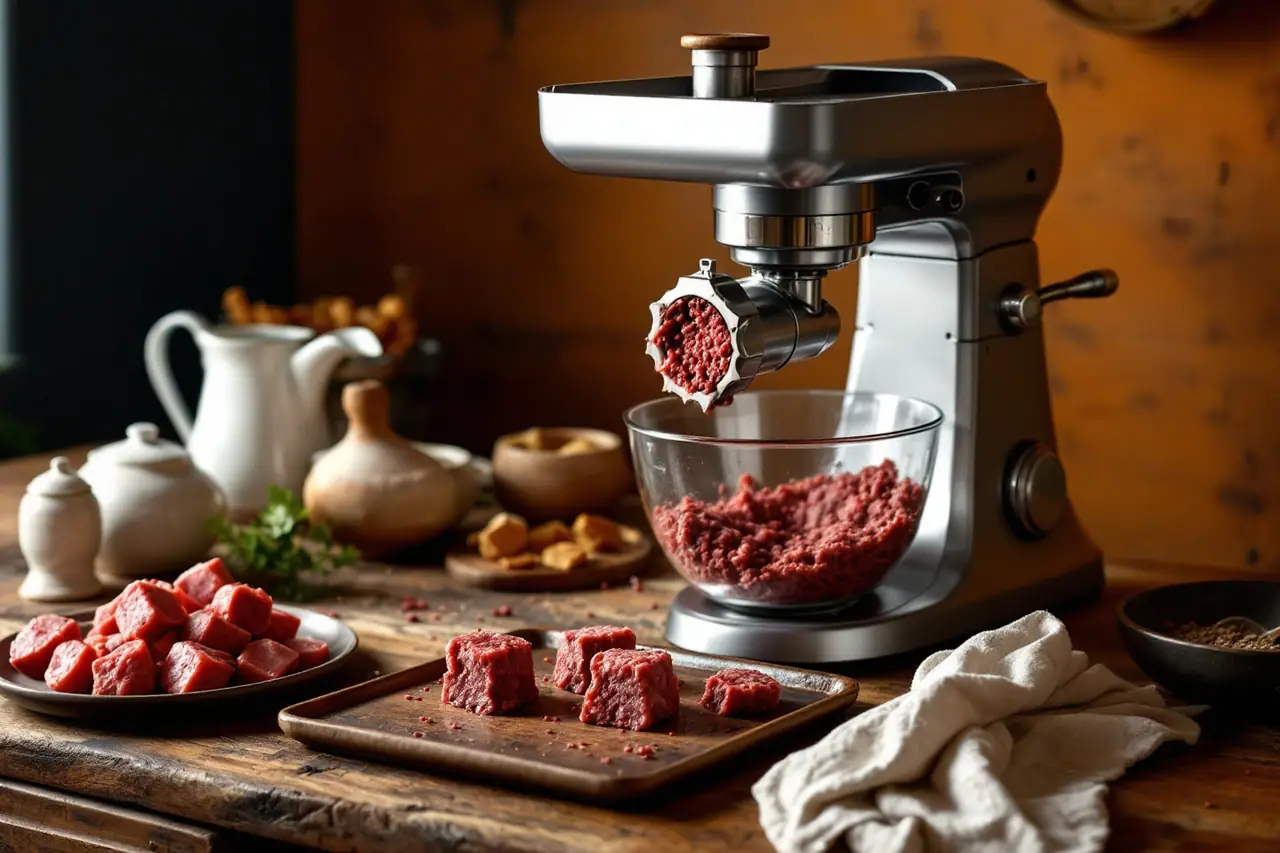
KitchenAid meat grinder attachment: grinding your own meatball mix
How a stand mixer grinder attachment works, which cuts to grind for meatballs, chilling and fat ratios, cleaning, and when a standalone meat grinder makes more sense.
Cook this one →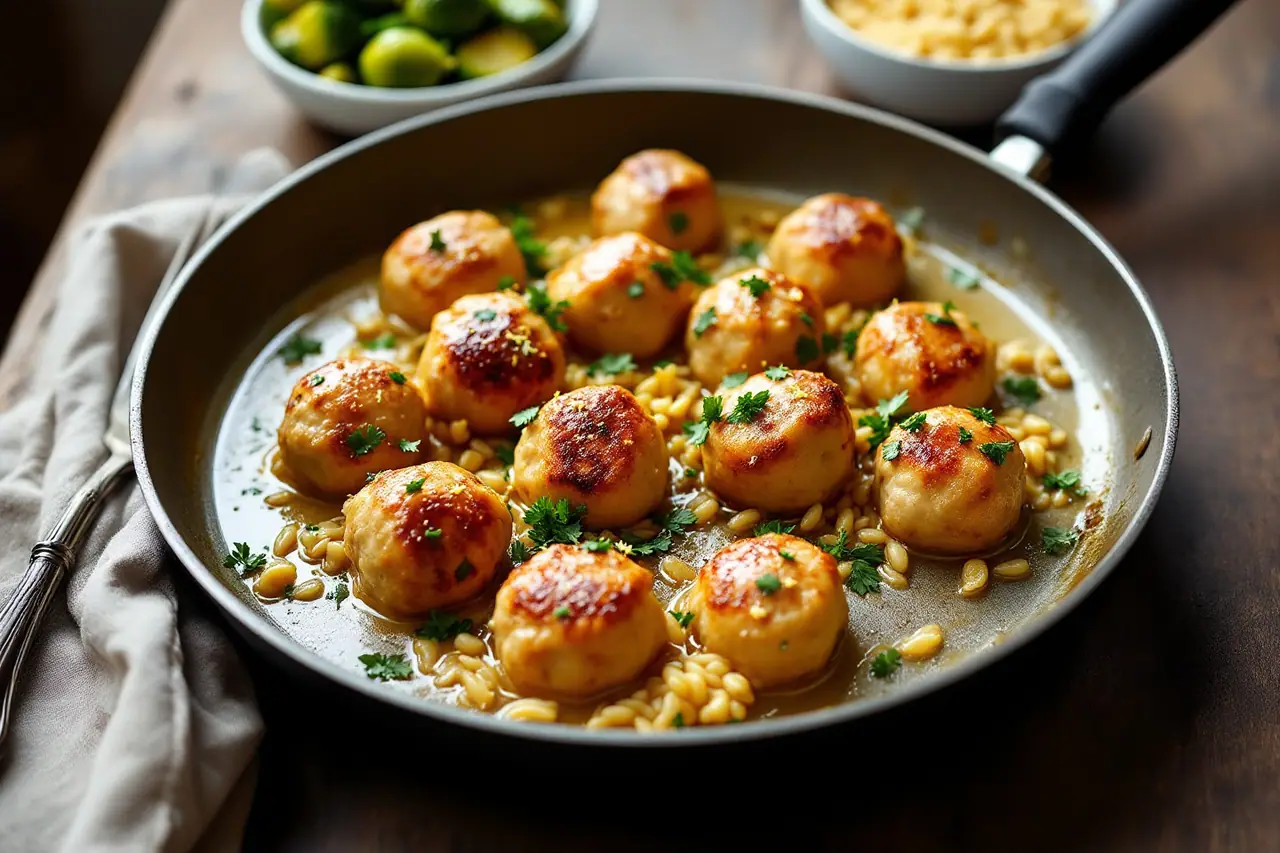
Chicken meatballs with lemon and parmesan, in a pan sauce
Tender chicken meatballs with lemon zest, garlic, parsley and parmesan, roasted hot and tossed in a quick lemon butter sauce. Weeknight timings and lunchbox leftovers.
Cook this one →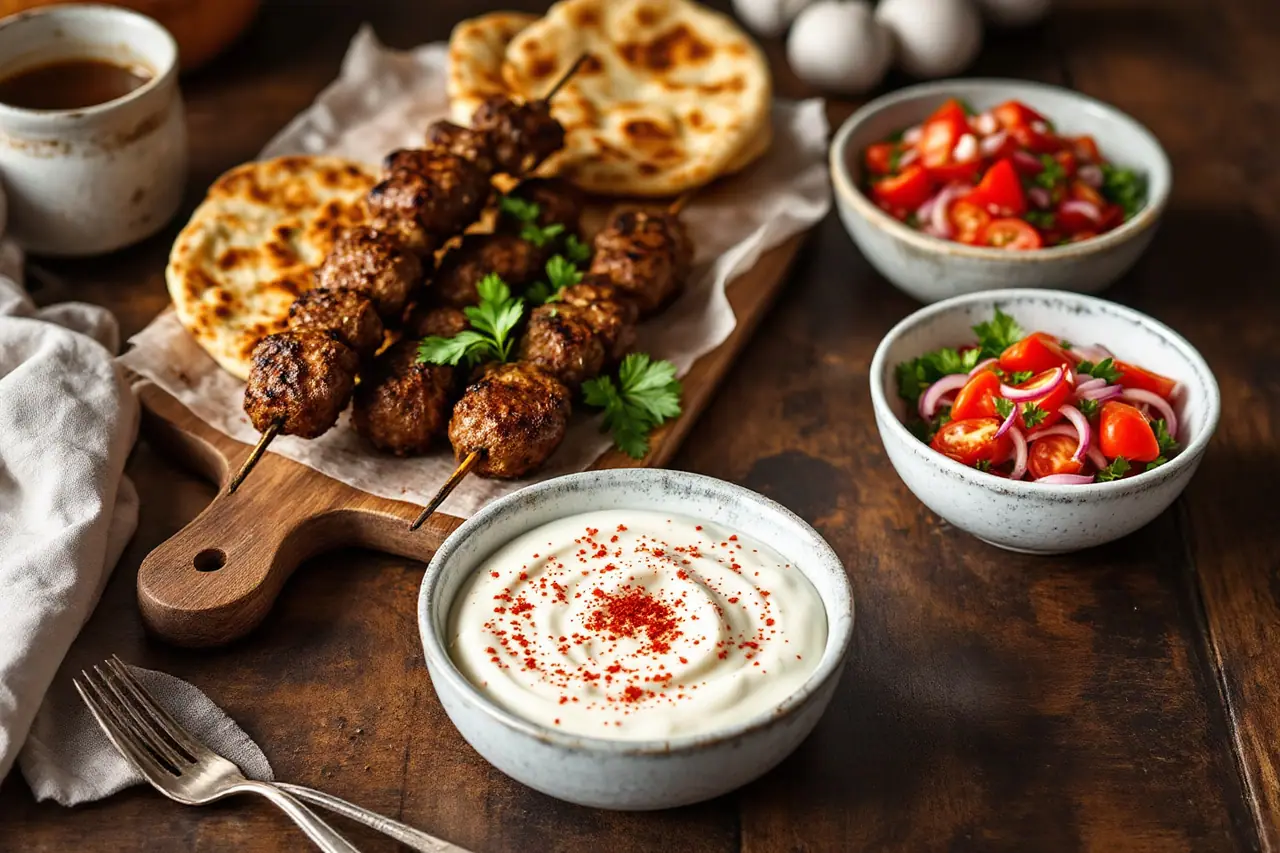
Lamb kofta with garlic yogurt, grilled or broiled
Spiced lamb kofta with onion, herbs, cumin and a little cinnamon, pressed onto skewers or rolled into balls, grilled or broiled, with a cool garlic yogurt sauce.
Cook this one →