
Chicken potstickers: a juicy filling and a crisp bottom
Chicken and cabbage potstickers with ginger and scallion, folded simply and cooked by the fry, steam, fry method, plus a freezer plan for a batch of sixty.
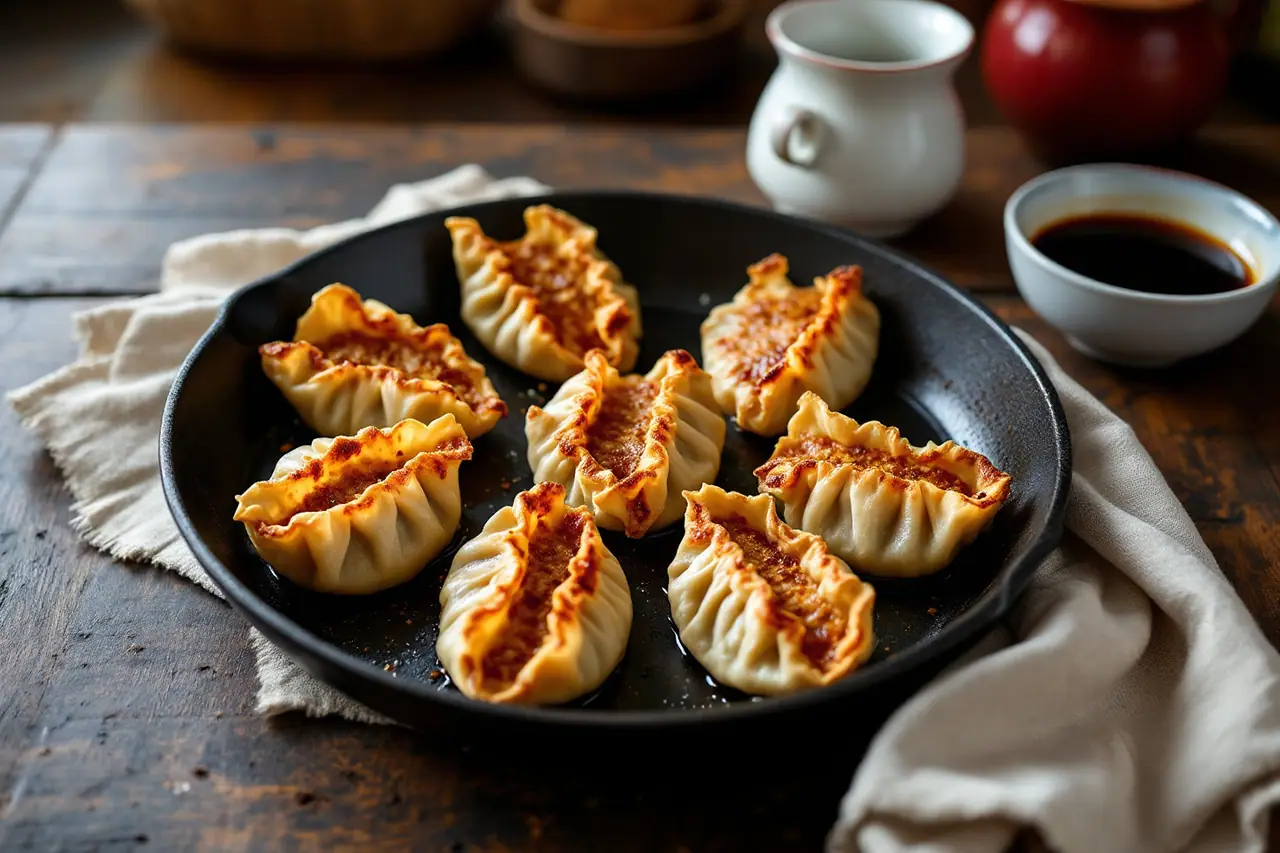
Potstickers are the dumplings I make most often, for a reason that has nothing to do with romance: they freeze better than almost anything else I cook, and they go from freezer to table in about 12 minutes. A bag of sixty in the freezer is four or five dinners for my house, or a dozen lunches, or the answer to "what can we have that isn't pasta." The name comes from the Chinese guotie, literally "pot stick," because they are fried until their bottoms cling to the pan and turn crisp, then steamed so the tops stay soft.
Pork is the classic filling, and Odile's pork and cabbage gyoza covers that beautifully. This piece is about chicken, which is leaner and needs a few adjustments to stay juicy. I am a methodical cook, so you will get the reasons along with the recipe, and a plan for making a big batch without losing an entire Sunday.
Why chicken fillings go dry, and the fixes
Ground chicken, especially from breast meat, has very little fat. Fat is what makes a dumpling filling juicy: it melts as the filling cooks and keeps everything moist and slippery. A lean chicken filling cooked to the safe 165°F (74°C) tends to come out tight and crumbly. Four fixes help, and I use all of them.
- Use thigh meat. Ground chicken thigh, or a mix of thigh and breast, has noticeably more fat. If you can only find breast, grind thighs yourself in a food processor, pulsing chilled chunks briefly.
- Add a little fat. A tablespoon of neutral oil and a teaspoon of toasted sesame oil per pound of meat.
- Add liquid and beat it in. Stir the chicken with the seasonings in one direction, adding a few tablespoons of cold stock or water a little at a time. The meat absorbs it and turns sticky and bouncy. This is the classic Chinese method for juicy fillings, and it works especially well with lean meat.
- Add vegetables that hold water. Finely chopped napa cabbage, salted and squeezed so it does not leak, plus scallion and ginger. A few rehydrated shiitake mushrooms, finely chopped, add both moisture and savoriness.
Folding without stress
You do not need elaborate pleats for potstickers. The simplest fold works perfectly well and holds up in the freezer.
Put a heaping teaspoon of filling, about 12 g, in the center of a round wrapper. Wet the edge all the way around with a fingertip dipped in water. Fold the wrapper in half over the filling and press the edges together firmly, from one end to the other, pushing out any air. That is a half-moon, and it is completely fine.
If you want the classic shape, make three or four small pleats along the front edge, pressing each one against the flat back edge, and then set the dumpling down so it sits on its seam side with a flat bottom. Odile's gyoza piece walks through the pleat step by step.
Store-bought round wrappers, often labeled potsticker or gyoza wrappers, are what I use. A 1-pound (450 g) pack usually holds 40 to 50 wrappers; check the count on yours. Keep the stack under a damp towel so the edges do not dry out.
The fry, steam, fry method
Every potsticker is cooked the same way, fresh or frozen.
- Heat a tablespoon of oil in a nonstick skillet with a lid over medium-high heat.
- Arrange the potstickers flat side down, close together but not touching. Fry until golden on the bottom, about 2 minutes.
- Pour in water, about 1/3 cup (80 ml) for a 10-inch (25 cm) pan, and cover immediately. It will spatter.
- Steam over medium heat for 5 minutes for fresh potstickers, 7 to 8 minutes from frozen.
- Uncover and let the remaining water cook off. Fry for another minute or two, until the bottoms are crisp again.
For chicken, the filling must reach 165°F (74°C). At this size, 5 minutes of steaming fresh or 8 from frozen gets there. The first time, cut one open or check one with a thin probe thermometer to be sure.
A freezer plan for sixty
Here is my batch plan. It takes about an hour and a half with one person, an hour with a helper.
| Step | Time |
|---|---|
| Salt and squeeze the cabbage, soak the mushrooms | 20 minutes (mostly waiting) |
| Mix the filling and chill it | 10 minutes |
| Fold 60 potstickers | 45 to 60 minutes |
| Freeze on floured trays | 2 hours, unattended |
| Bag and label | 5 minutes |
The quantities: 1 1/2 pounds (680 g) of ground chicken with the cabbage, mushrooms and seasoning makes about 750 g of filling, which fills roughly 60 potstickers at 12 g each, one and a half packs of wrappers. That is enough for four family dinners of 15, with rice and a vegetable.
The recipe
Chicken and cabbage potstickers
- Makes
- About 60 potstickers, serves 4 dinners of 4
- Prep
- 1 hr 15 min
- Cook
- 12 min
- Total
- 1 hr 27 min
Ingredients
Filling
- 3 cups225 g napa cabbage, finely chopped
- 1 tsp fine salt, for the cabbage
- 4 dried shiitake mushrooms, soaked in hot water for 20 minutes and finely chopped (optional)
- 1 1/2 lb680 g ground chicken, preferably thigh
- 2 tbsp30 ml soy sauce
- 1 tbsp15 ml Shaoxing wine or dry sherry (optional)
- 1 tbsp15 ml neutral oil
- 2 tsp10 ml toasted sesame oil
- 1 tbsp fresh ginger, finely grated
- 2 cloves garlic, grated
- 1 tsp sugar
- 1/4 tsp ground white pepper
- 4 tbsp60 ml cold chicken stock or water
- 4 scallions, finely chopped
To fold and cook
- 60 round potsticker or gyoza wrappers
- 1 tbsp15 ml neutral oil per batch
- 1/3 cup80 ml water per batch
Dipping sauce
- 3 tbsp45 ml soy sauce
- 2 tbsp30 ml Chinese black vinegar or rice vinegar
- 1 tsp fresh ginger, cut into fine shreds
- to taste chili oil
Method
- Toss the cabbage with the salt and leave for 15 minutes, then squeeze it hard in a towel until fairly dry.
- In a large bowl, combine the chicken, soy sauce, wine, both oils, ginger, garlic, sugar and white pepper.
- Stir in one direction while adding the cold stock a tablespoon at a time, for about 2 minutes, until the mix is sticky and holds together.
- Fold in the squeezed cabbage, mushrooms and scallions. Chill the filling for 15 minutes.
- Put about 12 g of filling in the center of a wrapper, wet the edge, fold into a half-moon and press firmly to seal. Pleat the front edge if you like. Set on a floured tray.
- To cook: heat the oil in a nonstick skillet with a lid over medium-high heat and fry the potstickers flat side down for 2 minutes until golden.
- Add the water, cover at once and steam over medium heat for 5 minutes (7 to 8 minutes from frozen).
- Uncover, let the water evaporate and fry for 1 to 2 minutes more until the bottoms are crisp. Check that the filling has reached 165°F (74°C).
- Mix the dipping sauce and serve the potstickers hot, crisp side up.
Cook's notes
- To freeze: freeze the uncooked potstickers on a floured tray until hard, then bag them. Cook from frozen; do not thaw.
- For boiled dumplings instead, simmer them in plenty of water for 5 to 6 minutes, until they float and the filling is cooked.
Freezing them properly
The tray step is essential. Lay the folded potstickers on a tray lined with parchment and dusted with flour or cornstarch, without touching. Freeze them uncovered for about 2 hours, until hard all the way through, then tip them into a freezer bag, press out the air and label it with the date. They keep their best quality for about 3 months.
Cook them straight from frozen. Thawed raw dumplings get soggy, the wrappers stick to everything, and the filling leaks. Frozen ones need only a couple more minutes of steaming.
What goes on the plate with them
Fifteen potstickers make dinner for four only if something else is on the table. In my house that is usually a pot of plain rice, a quick vegetable (bok choy or broccoli stir-fried with garlic, or a bag of frozen edamame), and a cucumber salad dressed with rice vinegar, a pinch of sugar and sesame seeds. On busier nights, a bowl of instant miso or a simple egg drop soup does the same job. Potstickers also make a good lunch on their own: six from the freezer, cooked in a small pan while the kettle boils, with the dipping sauce mixed in a mug.
Getting the crisp bottom right
The crisp bottom is the point of a potsticker, and it fails for a few predictable reasons.
- The pan was not hot enough when the dumplings went in, so they stuck and tore. Wait until the oil shimmers.
- Too much water. If water is still sloshing after 8 minutes, the bottoms will be soggy. Use about 1/3 cup (80 ml) for a 10-inch (25 cm) pan, a little less for smaller.
- Not enough time after uncovering. Let every last bit of water evaporate and listen for the sizzle to return.
- A pan that sticks. A good nonstick skillet makes this foolproof; a well-seasoned cast iron or carbon steel pan works once you know it.
Variations
- Chicken and shrimp: replace a third of the chicken with chopped raw shrimp for a bouncy, sweet filling.
- Chicken and corn: a handful of corn kernels and cilantro, a combination my children like.
- Spicy: a tablespoon of chili crisp in the filling.
- Vegetable: finely chopped mushrooms, carrots, cabbage and crumbled firm tofu, all squeezed dry.
If you like a well-stocked freezer, the same tray-freeze method works for meatballs; it is all in freezing meatballs, raw or cooked. More to fold and steam is in the dumplings kitchen.
Questions people ask
What is the difference between potstickers and gyoza?
Gyoza are the Japanese version of Chinese potstickers. Gyoza wrappers are usually thinner and the filling more finely chopped and garlicky, but they are cooked the same way.
Can I bake potstickers?
They will not get the same crisp bottom and soft top, but you can brush them with oil and bake them at 400°F (205°C) for 15 to 20 minutes, turning once. Steaming afterwards is not possible in the oven, so the wrappers stay firmer.
Why did my wrappers crack?
They dried out. Keep them under a damp towel and work in small stacks.

Sam Whitlock
Sam is the freezer planner in his house and the one who actually reads the air fryer manual. He writes about batch cooking, reheating, timings, safe temperatures and turning one big tray of meatballs into a week of dinners.
Cook next
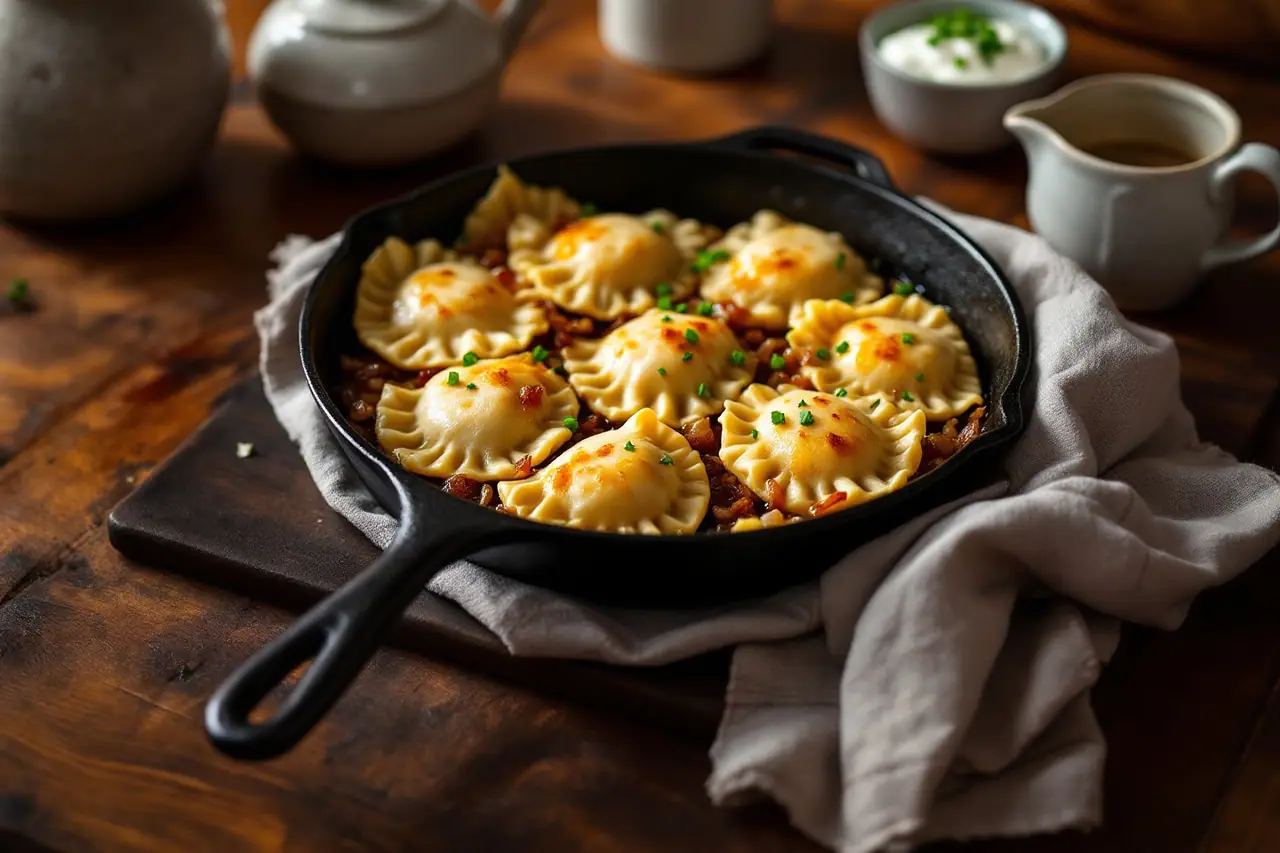
Pierogi recipe: potato and cheese, with a soft sour cream dough
Tender pierogi with a sour cream dough and a potato, cheese and onion filling: rolling, cutting, sealing, boiling, then a golden finish in butter with onions.
Cook this one →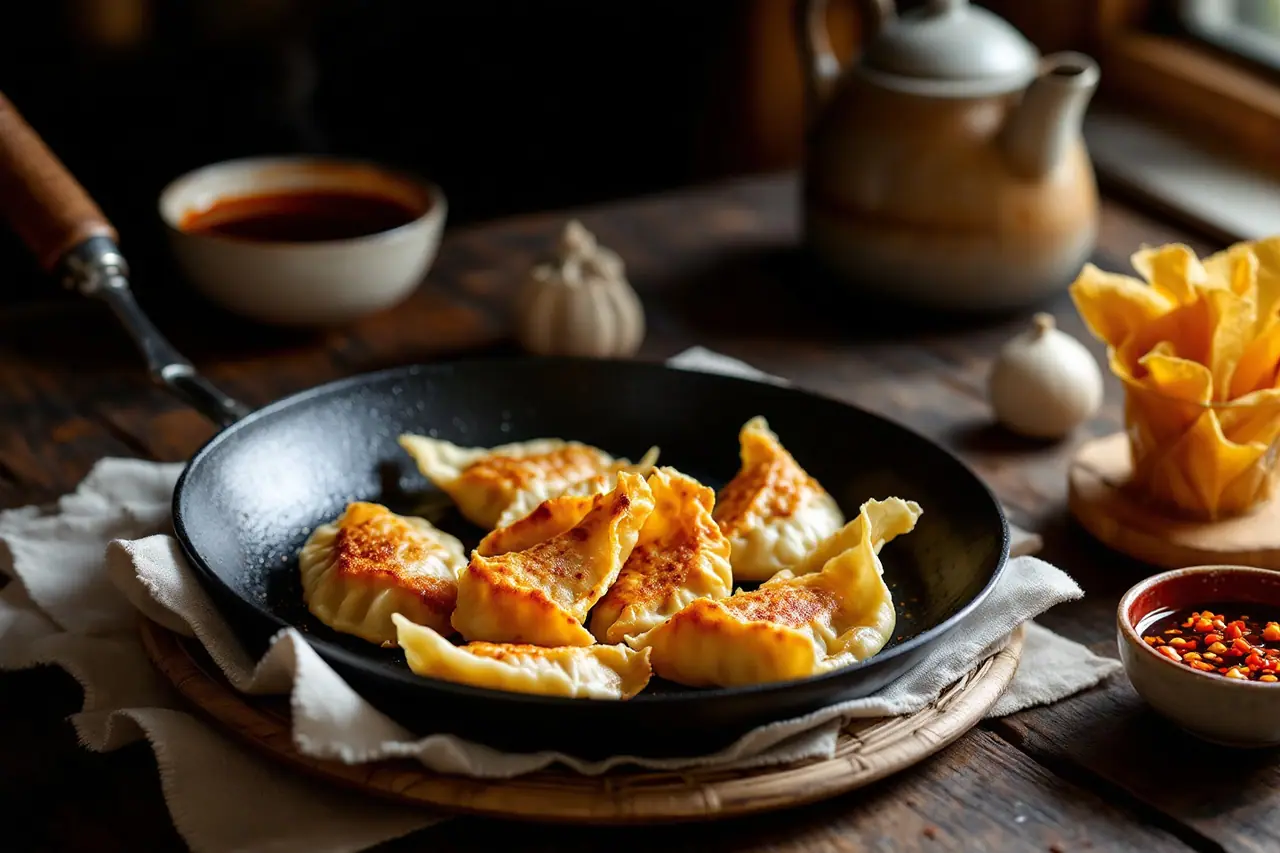
Pork and cabbage gyoza, pleated and pan-fried
Juicy pork and napa cabbage gyoza with a crisp golden base: the filling, the pleat step by step, the fry-steam-fry method, a lacy wing, and freezing a batch.
Cook this one →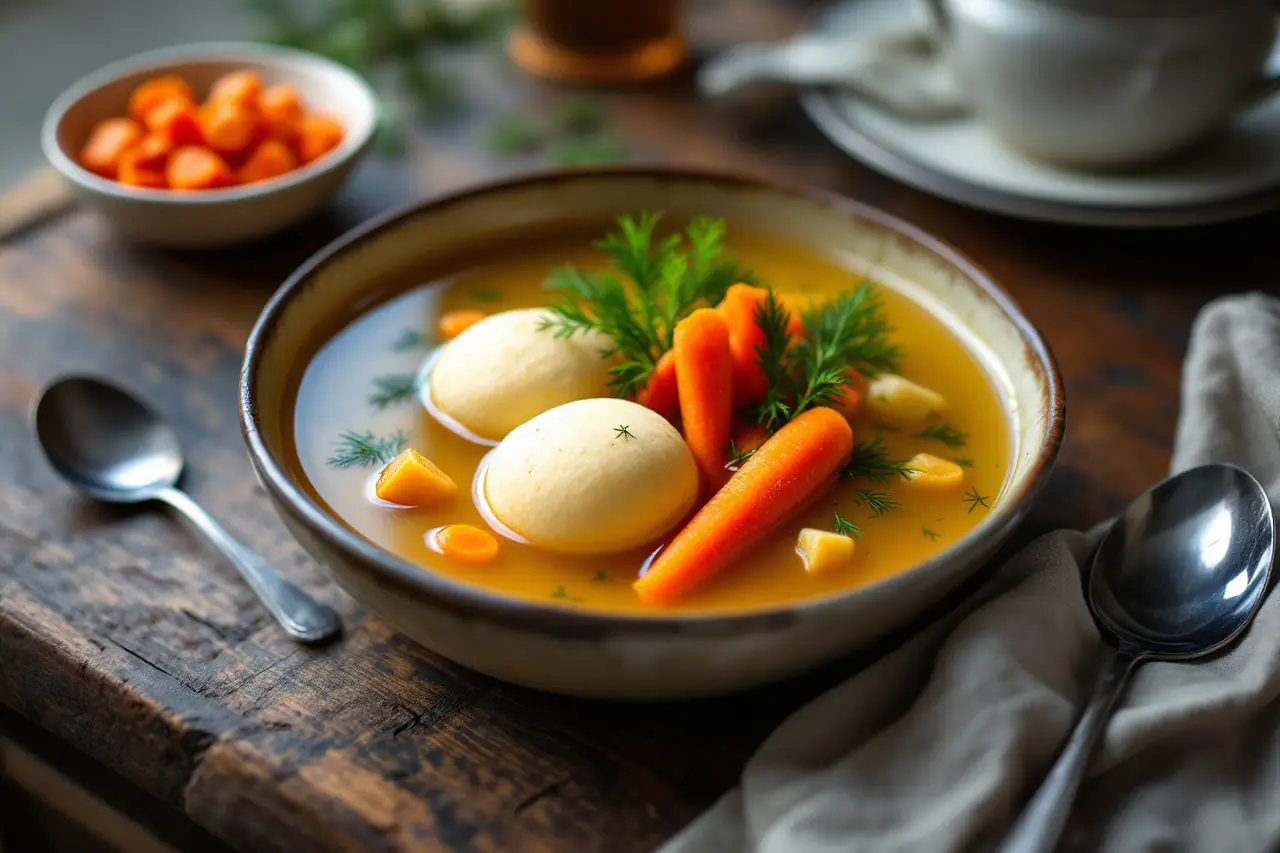
Matzo ball soup: light floaters or dense sinkers
A clear chicken soup with carrots and dill, and matzo balls made the way you like them, light and fluffy or firm and dense, with the reasons each one turns out that way.
Cook this one →