
Batch & FreezeKitchen Know-how
Freezing meatballs, raw or cooked, and cooking them from frozen
Raw or cooked, tray-frozen and bagged: how to freeze meatballs well, how long they keep, and how to cook or reheat them from frozen in the oven, sauce or air fryer.
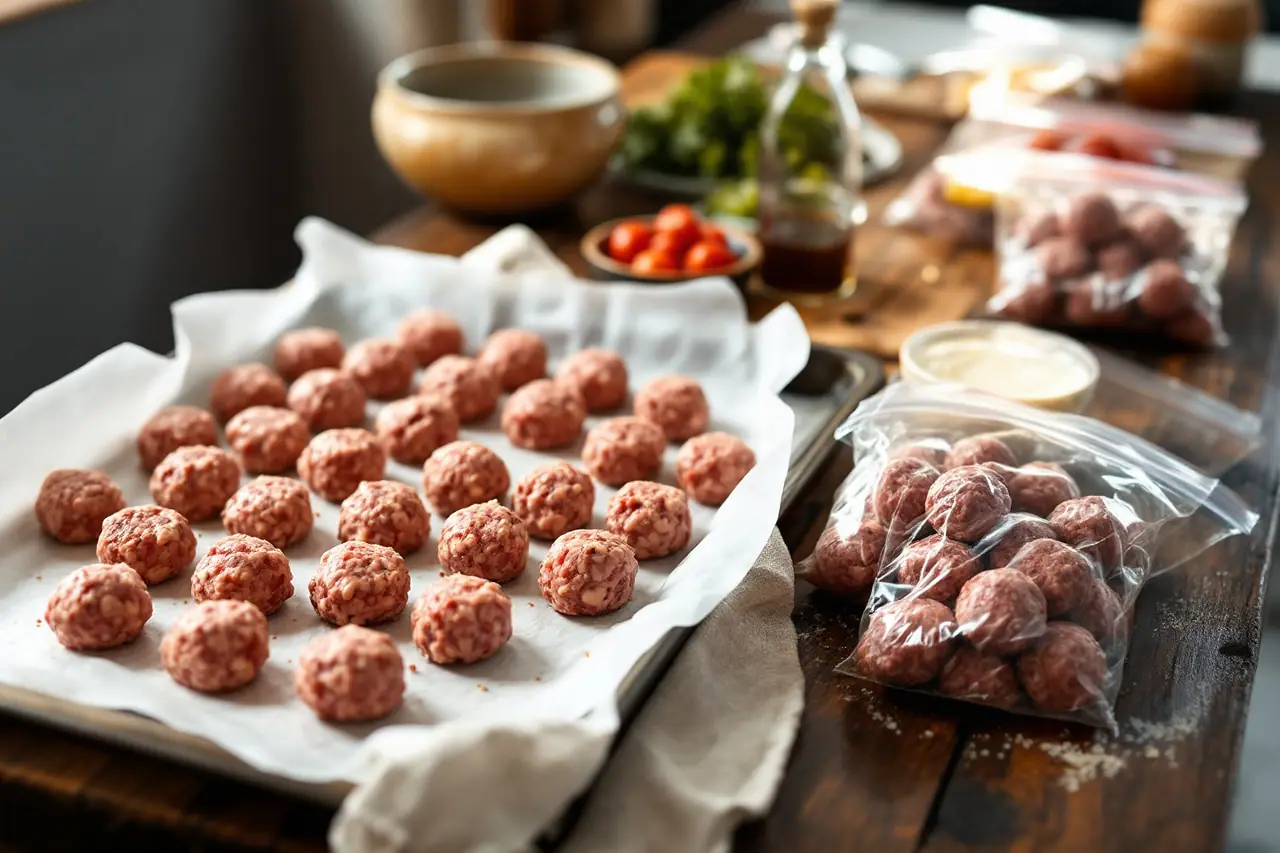
A bag of meatballs in the freezer is the closest thing I have to a dinner insurance policy. On a night when the plan falls apart, a dozen of them go into a pan of sauce or onto a tray in the oven, the water goes on for pasta, and nobody needs to know there was no plan. I make meatballs in big batches for exactly this reason, and over the years I have settled on a routine that keeps them tasting fresh for months.
This guide covers the two big decisions (freeze them raw or cooked, and how) and then the part people actually search for at six in the evening: how to cook them from frozen, by every method I use, with times. It applies to any of the meatball recipes on this site and to store-bought frozen meatballs too.
Raw or cooked: which to freeze
Both work, and I do both, for different reasons.
| Freeze raw | Freeze cooked | |
|---|---|---|
| Texture after cooking | Closest to fresh; browns well | Very good, slightly firmer |
| Speed on the night | Needs full cooking, 20 to 30 minutes | Only needs reheating, 10 to 20 minutes |
| Best for | Roasting, frying, simmering in sauce | Sauce, soups, subs, quick lunches |
| Batch day effort | Roll and freeze only | Roll, cook, cool, then freeze |
| Risk of drying out | Low | A little higher if reheated too long |
My rule of thumb: if I know they are going into a long simmer in sauce, I freeze them raw. If I want the fastest possible dinner later, I freeze them cooked.
The tray-freeze method
Whether raw or cooked, the method is the same, and it is the one thing I would ask you not to skip. Freeze the meatballs individually on a tray first, then bag them. Put them straight into a bag soft and they freeze into one solid lump that you have to attack with a knife.
- Line a rimmed sheet pan (or any tray that fits your freezer) with parchment.
- Set the meatballs on it in a single layer, not touching. Raw meatballs should be freshly rolled and cold; cooked ones should be cooled first (see below).
- Freeze uncovered for 1 to 2 hours, until each meatball is hard all the way through.
- Tip them into a freezer bag or a rigid container. Press as much air out of the bag as you can. Air is what causes freezer burn.
- Label the bag with what is inside, whether it is raw or cooked, the size and the date. In three weeks you will not remember, I promise.
A half sheet pan holds about 40 meatballs of 30 g, so a batch made with 3 pounds (1.4 kg) of meat, which comes to roughly 2 kg of mix and about 65 meatballs at 30 g, needs two trays or two rounds.
Cooling cooked meatballs safely
Cooked meatballs must be cooled quickly before freezing. Food safety guidance is to refrigerate cooked food within 2 hours of cooking. Spread the meatballs out on the tray so they cool fast rather than piling them in a deep bowl, let the steam come off for 15 to 20 minutes, then put the tray in the fridge until they are cold. Freeze them from cold.
If they were cooked in sauce, cool the sauce and meatballs together in a wide, shallow container, then freeze them in portions. Meatballs frozen in sauce are protected from freezer burn and reheat beautifully, though they take longer to thaw.
How long frozen meatballs keep
Frozen food kept at 0°F (-18°C) stays safe indefinitely, but quality slowly declines. For the best taste and texture, use frozen meatballs within about 3 months, raw or cooked. After that they are still safe if they have stayed frozen, but they can taste a little stale or dry around the edges, especially if the bag was not airtight.
Signs of freezer burn are pale, dry, greyish patches on the surface. It is a quality problem, not a safety one; trim the worst spots or let the meatballs simmer in sauce, which hides it well.
Thawing, if you want to
You do not have to thaw meatballs before cooking. Every method below works from frozen. If you prefer to thaw them, do it in the fridge: overnight for a bag of small meatballs, up to 24 hours for meatballs frozen in a block of sauce. Do not thaw meatballs on the counter; the outside warms into the danger zone long before the middle softens.
Cooking and reheating from frozen
Here is the table I keep on the inside of a kitchen cupboard door. Times are for meatballs of about 30 to 40 g; larger ones need longer. The important number is the last column. Cook raw ground beef, pork and lamb to 160°F (71°C) and raw ground chicken and turkey to 165°F (74°C). Reheat cooked meatballs, of any meat, to 165°F (74°C). Check the center of the largest one with an instant-read thermometer.
| Method | From frozen raw | From frozen cooked | Target in the center |
|---|---|---|---|
| Oven, 400°F (205°C), on a parchment-lined tray | 25 to 30 minutes, turning once | 15 to 20 minutes | Raw: 160°F (71°C) or 165°F (74°C); cooked: 165°F (74°C) |
| Air fryer, 380°F (195°C), one layer | 12 to 16 minutes, shaking halfway | 8 to 12 minutes | Same as above |
| Simmering in sauce, covered, on the stove | 25 to 35 minutes, stirring gently | 15 to 20 minutes | Same as above |
| Slow cooker on low, in sauce | Not recommended from raw | 3 to 4 hours | 165°F (74°C) |
| Microwave, covered, with a splash of water | Not recommended | 2 to 4 minutes, stirring halfway | 165°F (74°C) |
A few notes on the methods.
The oven is the most reliable for raw meatballs: they brown as they thaw and cook, and you can do a big batch at once. Brush them with a little oil first for color.
The air fryer is the fastest for a small batch, and it gives the best crust on cooked meatballs. Do not crowd the basket; one layer with a little space around each meatball. More on air fryer timing in a separate piece, but the times above are a good start.
Simmering in sauce gives the most tender result, especially for raw meatballs. Keep the sauce at a gentle bubble with a lid on; a hard boil makes the outside tough before the middle is cooked. Stir gently so they do not break.
The slow cooker is fine for cooked meatballs in sauce, which is how party meatballs are usually made. I do not start raw frozen meatballs in a slow cooker, because they spend too long warming through at a low temperature.
The microwave is for one person's lunch, not for dinner for four. It works, but it can make the meatballs rubbery.
The recipe
Freezer batch meatballs
- Makes
- About 65 meatballs of 30 g, four or five dinners
- Prep
- 45 min
- Cook
- 20 min
- Total
- 1 hr 5 min
Ingredients
Meatballs
- 5 slices5 slices (about 150 g) white sandwich bread, crusts removed
- 3/4 cup180 ml whole milk
- 3 large eggs
- 1 1/2 cups135 g finely grated parmesan
- 4 cloves garlic, grated
- 1/2 cup20 g flat-leaf parsley, chopped
- 1 tbsp1 tbsp (about 15 g) fine salt
- 3/4 tsp black pepper
- 2 lb900 g ground beef, 80/20
- 1 lb450 g ground pork
- 2 tbsp30 ml olive oil, for the trays (if cooking before freezing)
Method
- Tear the bread into a large bowl, add the milk, leave for 5 minutes and mash to a paste.
- Whisk in the eggs, parmesan, garlic, parsley, salt and pepper.
- Add the beef and pork and mix gently by hand until just even. Fry a small test patty and adjust the salt.
- With wet hands, roll into balls of about 30 g and set them on parchment-lined trays, not touching.
- To freeze raw: put the trays in the freezer, uncovered, for 1 to 2 hours until hard, then bag, label and date.
- To freeze cooked: heat the oven to 425°F (220°C), drizzle the meatballs with the oil and roast for 14 to 18 minutes, until the center reads 160°F (71°C).
- Spread the cooked meatballs out to cool for 20 minutes, then refrigerate until cold, within 2 hours of cooking.
- Tray-freeze the cold cooked meatballs until hard, then bag them, press out the air, and label with the date.
- Use within about 3 months for the best quality, cooking or reheating from frozen with the times in the table above.
Cook's notes
- Half a batch frozen raw and half cooked gives you both options for later.
- Store freezer bags flat until frozen; they stack neatly afterwards.
Store-bought frozen meatballs
Everything above applies to frozen meatballs from the supermarket, with one difference: most of them are fully cooked before they are frozen, so they only need reheating to 165°F (74°C). Check the package, which says whether they are cooked or raw and gives the maker's times. They tend to be smaller and denser than homemade, so start checking a few minutes early.
What does not freeze well
Most meatballs freeze happily. A few things do not.
- Meatballs in a cream sauce can turn grainy when reheated. Freeze the meatballs alone and make the gravy fresh, or whisk a splash of fresh cream into the reheated sauce to bring it back.
- Very lean meatballs, such as 99 percent lean turkey, dry out more on reheating. Freeze them in sauce.
- Fried coatings, like breaded meatballs or fritters, lose some crunch. Reheat them in the oven or air fryer, never the microwave.
A batch-day routine
Here is how I do a freezer session on a Sunday afternoon: make one big mix, roll everything, roast half and freeze the other half raw. While the first trays roast, the second set goes into the freezer. An hour and a half later I have roughly 65 meatballs in four labeled bags, and the kitchen is clean. The classic beef and pork method is my base for this, and the turkey version freezes well too, preferably in sauce.
For the official numbers behind the temperatures above, FoodSafety.gov keeps a chart of safe minimum internal temperatures. More make-ahead cooking lives in the batch and freeze kitchen.
Questions people ask
Can I refreeze meatballs?
Raw meatballs thawed in the fridge can be refrozen, with some loss of quality. Once cooked from frozen, cooked meatballs can be cooled and frozen again within 2 hours. Never refreeze anything thawed on the counter.
Do I need to thaw frozen meatballs before putting them in sauce?
No. Add them frozen to simmering sauce, cover, and allow about 10 minutes more than for thawed ones, checking the center temperature.
How can I tell if frozen meatballs have gone bad?
If they stayed frozen, they are safe; quality is the issue. Heavy freezer burn, an off smell after cooking, or a bag that thawed and refroze are reasons to throw them away.

Sam Whitlock
Sam is the freezer planner in his house and the one who actually reads the air fryer manual. He writes about batch cooking, reheating, timings, safe temperatures and turning one big tray of meatballs into a week of dinners.
Cook next
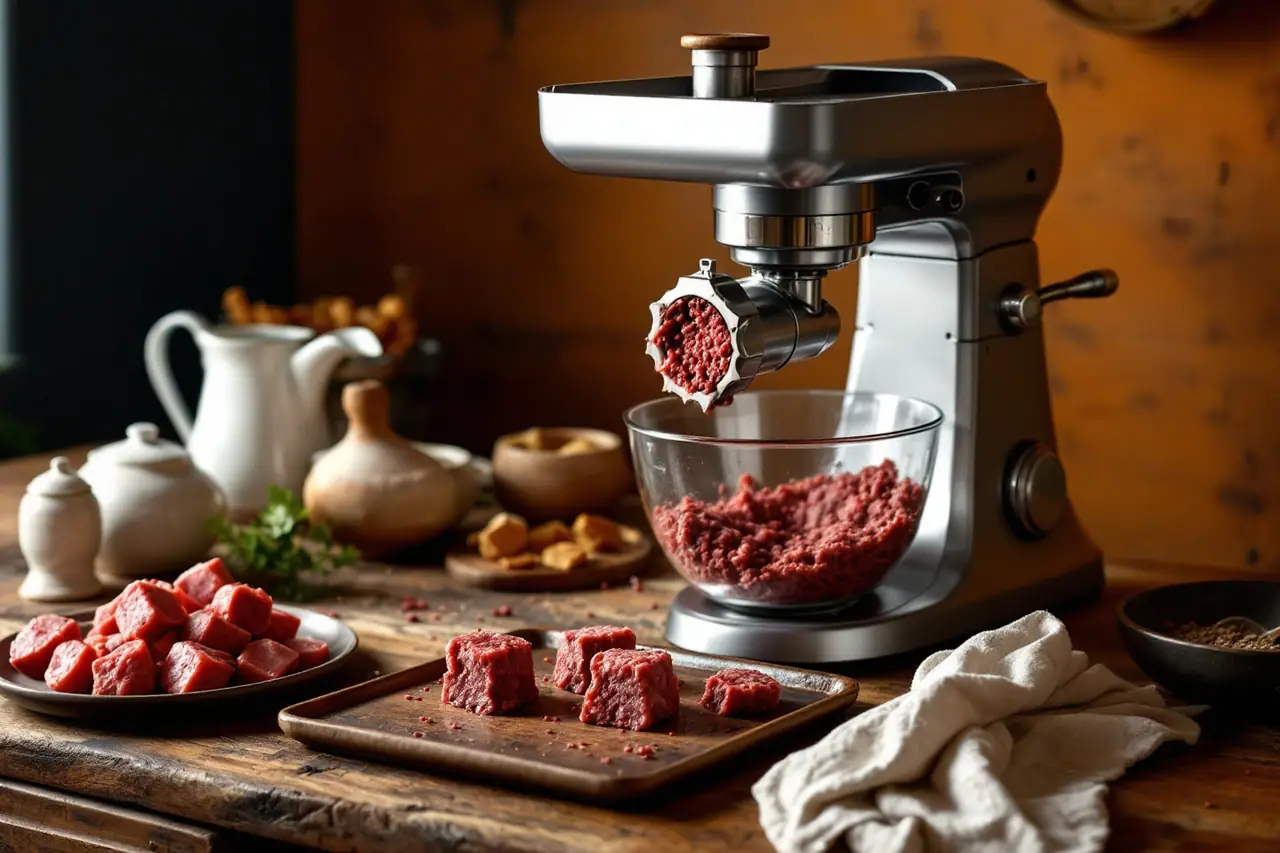
KitchenAid meat grinder attachment: grinding your own meatball mix
How a stand mixer grinder attachment works, which cuts to grind for meatballs, chilling and fat ratios, cleaning, and when a standalone meat grinder makes more sense.
Cook this one →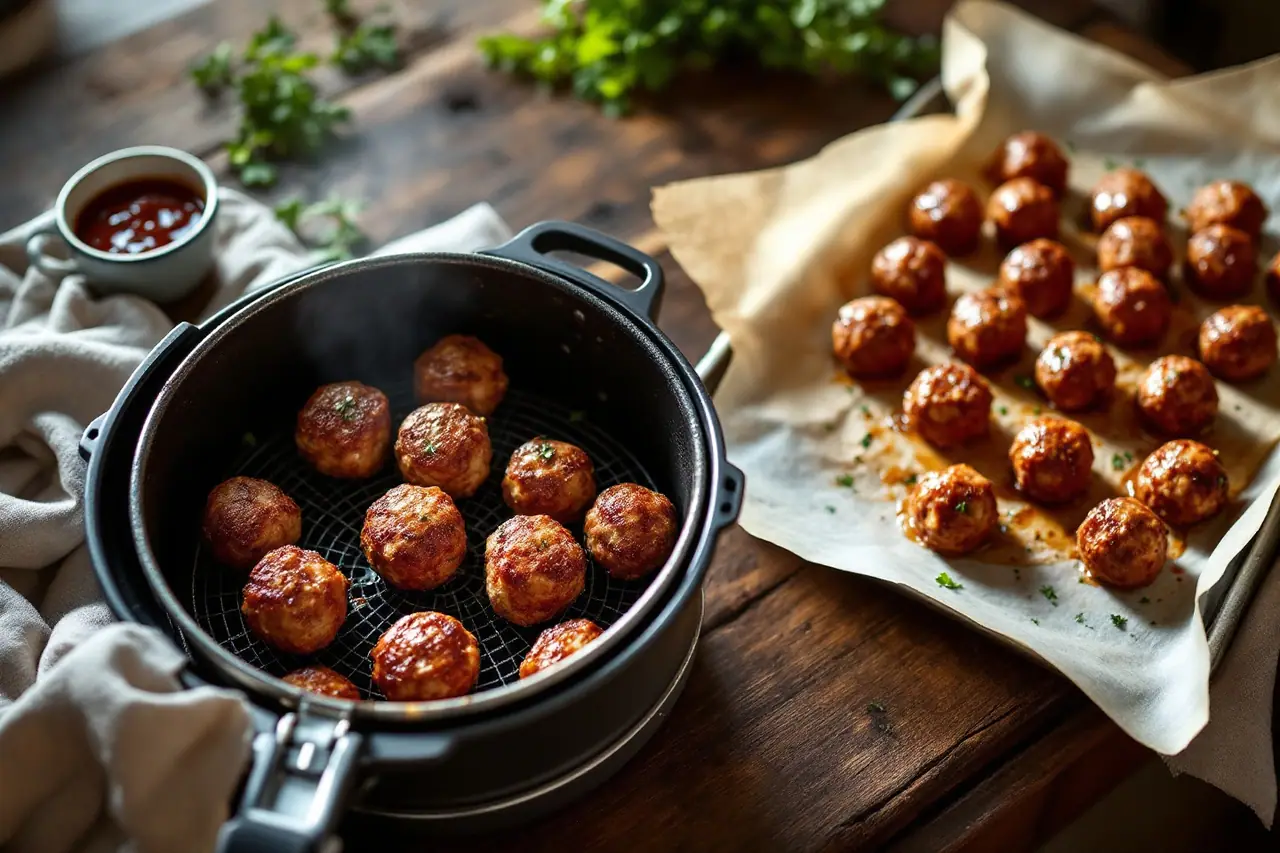
Air fryer meatballs vs oven-baked: times, temperatures, texture
How the air fryer and the oven each cook meatballs, which one browns better, how big a batch each handles, and a table of times and temperatures by meatball size.
Cook this one →