
Albondigas soup: meatballs with rice in a tomato and mint broth
Caldo de albondigas the way my grandmother made it in San Antonio: tender beef meatballs with rice and mint, simmered in a light tomato broth with vegetables.
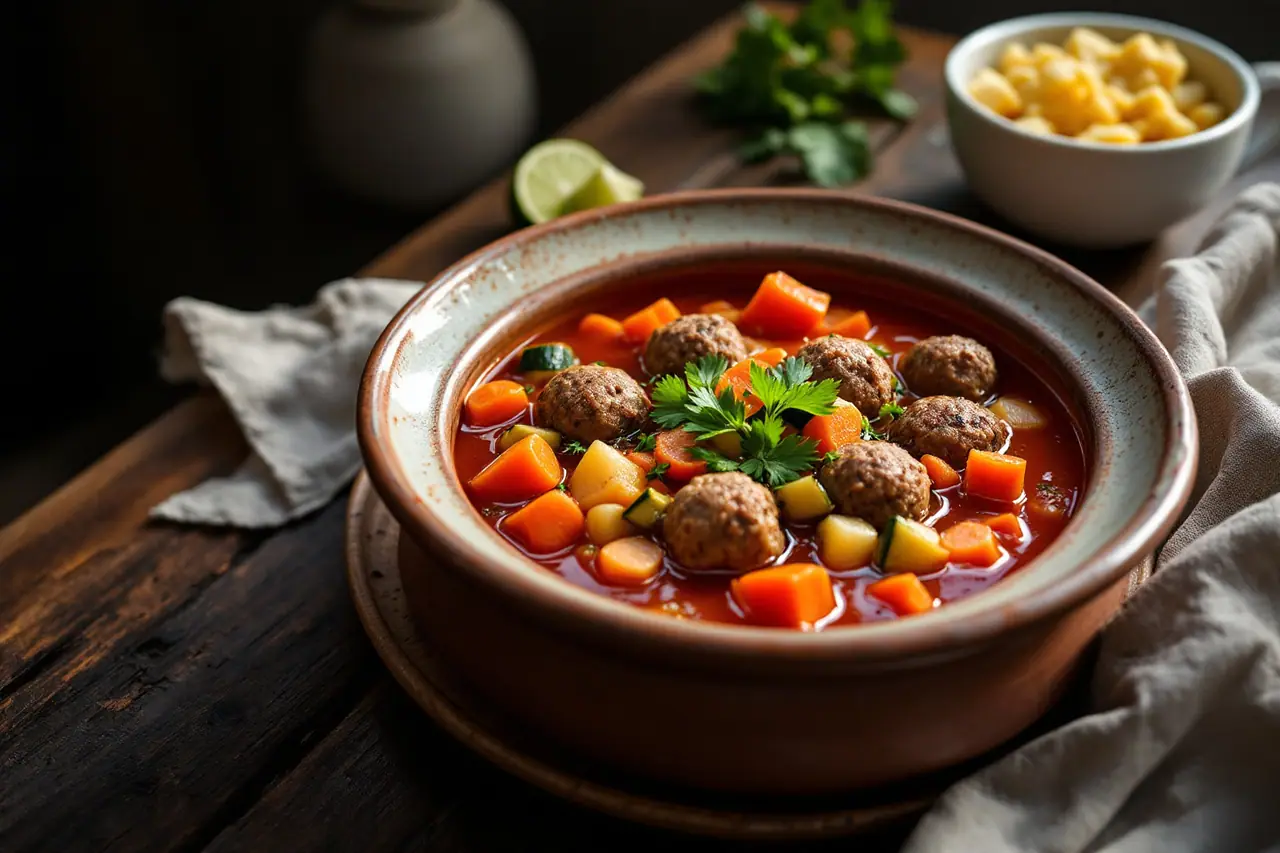
When the weather turned in San Antonio, my grandmother made caldo de albondigas. It was the soup for a cold, wet day, for a cold in the house, for a Sunday when the family arrived hungry and she wanted one big pot to do all the work. The meatballs were small and soft, flecked with rice and fresh mint, and they cooked right in the broth, which turned light red from the tomato and rich from the meat. Carrots, potatoes and zucchini went in near the end. At the table, everyone added lime, cilantro, chopped onion and a spoonful of salsa to their own bowl.
Albondigas is the Spanish word for meatballs, from the Arabic al-bunduqa, and meatballs in some form are cooked all over Spain and Latin America. In Mexico and in Mexican-American kitchens across Texas and California, the soup version is a classic, and every family makes it a little differently. Some add chipotle for smoke, some use a mix of beef and pork, some skip the rice. This is the way I make it now, which is close to the way I remember it.
What makes these meatballs different
Two things set albondigas apart from Italian or Swedish meatballs.
The first is the rice. Raw long-grain rice goes straight into the meat mix. As the meatballs simmer in the broth, the rice cooks inside them, absorbing juices and swelling, which makes the meatballs tender and slightly loose. Use raw rice, not cooked; cooked rice turns the mix mushy.
The second is the mint. Fresh spearmint (hierbabuena) is the classic herb in the meatballs, and it gives them a cool, bright flavor that you might not expect. If you have only dried mint, use a teaspoon. Cilantro works too, but the mint is what tastes like my grandmother's soup.
Otherwise the mix is familiar: ground beef (or beef and pork), an egg, grated onion, garlic, cumin, oregano, salt and pepper. No bread. The rice does the job the panade does in other meatballs.
Rolling and the gentle cook
Mix gently with your hands, just until even, and chill the mix for 20 minutes so it rolls cleanly. Roll small, about the size of a walnut (25 g), with wet hands. Small meatballs cook through in the same time the rice inside needs, about 25 to 30 minutes.
The important technique is the simmer. The meatballs go raw into the hot broth, and the broth should be at a gentle simmer, never a rolling boil. A hard boil breaks them apart before the egg and the meat have set. Lower them in one at a time with a spoon, do not stir for the first 10 minutes, then stir carefully.
The broth
The broth starts with a sofrito-style base: onion, garlic and a little tomato, cooked in oil until soft. Then comes the liquid. My grandmother used water and let the meatballs flavor it, which works beautifully. I usually use half water and half chicken or beef stock for a little more depth. Tomato goes in two forms: a can of crushed tomatoes or tomato sauce, and sometimes a couple of fresh tomatoes blended with the onion and garlic.
Season with cumin and Mexican oregano, which is more citrusy and floral than Mediterranean oregano, and a bay leaf. For a smoky version, blend one or two canned chipotle chiles in adobo with the tomatoes.
The vegetables
Carrots, potatoes and zucchini are the classic trio, with sometimes chayote, green beans, or a handful of cabbage. The timing is what matters: carrots and potatoes need about 20 minutes, zucchini only 8 to 10. Cut everything into bite-size pieces so it fits on a spoon with a meatball.
A worked plan for a pot for eight
This makes a big pot. Here is the order I cook it in, about an hour and a quarter from start to table.
| Time | Step |
|---|---|
| 0 minutes | Mix the meatballs and chill them. Chop the onion, garlic and vegetables. |
| 15 minutes | Soften the onion and garlic in oil, add the tomato and spices, then the liquid. Bring to a simmer. |
| 25 minutes | Roll about 40 small meatballs and lower them into the simmering broth. |
| 35 minutes | Add the carrots and potatoes. |
| 55 minutes | Add the zucchini. Taste for salt. |
| 65 minutes | Check a meatball: rice tender, center at 160°F (71°C). Add mint or cilantro. |
The meat math: 1 1/2 pounds (680 g) of ground beef with the rice, egg and onion makes about 1,000 g of mix. At 25 g each that is about 40 meatballs, five each for eight people.
The recipe
Caldo de albondigas (meatball soup)
- Makes
- About 40 small meatballs, serves 8
- Prep
- 30 min
- Cook
- 50 min
- Total
- 1 hr 20 min
Ingredients
Meatballs
- 1 1/2 lb680 g ground beef, 80/20, or half beef and half pork
- 1/3 cup65 g raw long-grain white rice, rinsed
- 1 large egg
- 1/2 small onion, finely grated
- 2 cloves garlic, grated
- 3 tbsp fresh mint (hierbabuena), finely chopped
- 1 tsp ground cumin
- 1/2 tsp dried Mexican oregano
- 1 1/2 tsp1 1/2 tsp (about 8 g) fine salt
- 1/2 tsp black pepper
Broth
- 2 tbsp30 ml neutral oil
- 1 medium onion, finely chopped
- 3 cloves garlic, chopped
- 1 (15 oz) can1 (425 g) tin tomato sauce or crushed tomatoes
- 1 to 2 chipotle chiles in adobo, blended with the tomato (optional)
- 10 cups2.4 liters water, or half water and half chicken or beef stock
- 1 tsp ground cumin
- 1 tsp dried Mexican oregano
- 1 bay leaf
- 2 tsp fine salt, then more to taste
- 3 carrots, sliced
- 2 medium potatoes, peeled and diced
- 2 medium zucchini, diced
To serve
- as you like lime wedges, chopped cilantro, chopped white onion, warm corn tortillas, salsa
Method
- Mix all the meatball ingredients gently with your hands until even. Chill for 20 minutes.
- In a large pot, warm the oil over medium heat and cook the onion for 5 minutes, then the garlic for 1 minute.
- Add the tomato sauce (blended with the chipotle if using), cumin, oregano and bay leaf and cook for 3 minutes.
- Pour in the water or stock, add the salt and bring to a gentle simmer.
- With wet hands, roll the meat mix into balls of about 25 g and lower them one by one into the simmering broth. Do not stir for 10 minutes.
- Add the carrots and potatoes and simmer gently, partly covered, for 20 minutes.
- Add the zucchini and simmer for 8 to 10 minutes more, until all the vegetables and the rice in the meatballs are tender.
- Check that a meatball reads 160°F (71°C) in the center and taste the broth for salt.
- Serve in deep bowls with lime, cilantro, chopped onion, tortillas and salsa on the side.
Cook's notes
- Keep the broth at a gentle simmer once the meatballs go in, or they may break apart.
- The soup keeps for 4 days in the fridge and freezes well for 3 months without the zucchini.
Albondigas beyond the soup
On my long trip through Spain I learned that albondigas there usually mean something else: meatballs served as a tapa in a sauce, not a soup. A small clay dish arrives with four or five meatballs in a tomato sauce, or in a pale almond and saffron sauce, or in a dark gravy with sherry, and you mop it up with bread. The meatballs are often a mix of beef and pork, bound with bread soaked in milk rather than rice, browned in olive oil first, then simmered in the sauce.
You can borrow that idea from this recipe easily. Make the meatball mix without the rice and with soaked bread instead, brown the meatballs, and simmer them for 20 minutes in the tomato base above with only a cup of stock instead of ten. Finish with a splash of dry sherry and chopped parsley, and put a loaf of crusty bread on the table.
Choosing the herbs
Mint is the herb my grandmother used, and spearmint is the one to look for; peppermint is too strong and tastes of toothpaste in a meatball. If your store has only a generic "mint", taste a leaf: you want it sweet and fresh, not cooling. Cilantro is the other common choice, and some families use both, mint in the meatballs and cilantro on top. Mexican oregano, sold in Latin American grocery aisles, has a citrusy flavor that suits the broth; Mediterranean oregano works if that is what you have, used a little more sparingly.
Serving it the family way
Put the garnishes on the table and let everyone finish their own bowl: lime wedges, chopped cilantro, finely chopped white onion, a bottle of hot sauce or a bowl of salsa, and a stack of warm corn tortillas. Some people tear tortillas into the soup; some roll them up and dunk them. A squeeze of lime is not optional in my family; it wakes the broth up.
Leftovers and freezing
The soup is even better the next day, as the meatballs settle into the broth. Cool it quickly in shallow containers and refrigerate within 2 hours; it keeps for 4 days. Reheat it gently until it simmers, 165°F (74°C), without boiling hard. The rice in the meatballs keeps absorbing broth, so you may need to add a splash of water.
To freeze, cook the soup without the zucchini (which turns soft), cool it, and freeze it in portions for up to 3 months. Add fresh zucchini when you reheat.
Variations
- Smoky: two chipotles in adobo blended into the tomato base.
- Beef and pork: half and half, for softer, richer meatballs.
- Chicken: ground chicken thigh meatballs with cilantro, cooked to 165°F (74°C), in chicken broth.
- More vegetables: chayote, green beans or corn on the cob cut into rounds.
If you like albondigas, the method will remind you of other small meatballs on this site. The rice does the job the bread paste does in the classic meatball, and the gentle cook in liquid is the same idea as the matzo ball soup. More from the meatball family is in the meatball kitchen.
Questions people ask
Do I cook the rice before adding it to the meatballs?
No. Raw rice cooks inside the meatballs as they simmer. Cooked rice makes them mushy.
Why did my albondigas fall apart?
The broth was boiling too hard, or the meatballs were stirred too soon. Keep it at a gentle simmer and wait 10 minutes before stirring.
Can I make albondigas without rice?
Yes. Add 1/3 cup (30 g) of fine breadcrumbs soaked in a little milk instead. The meatballs will be a little firmer.

Diego Salazar
Diego cooks from his grandmother's kitchen in San Antonio and from the tapas bars he fell for on a long trip through Spain. He writes about albondigas, croquetas, kofta off the grill, falafel and spice, and about feeding a crowd without fuss.
Cook next
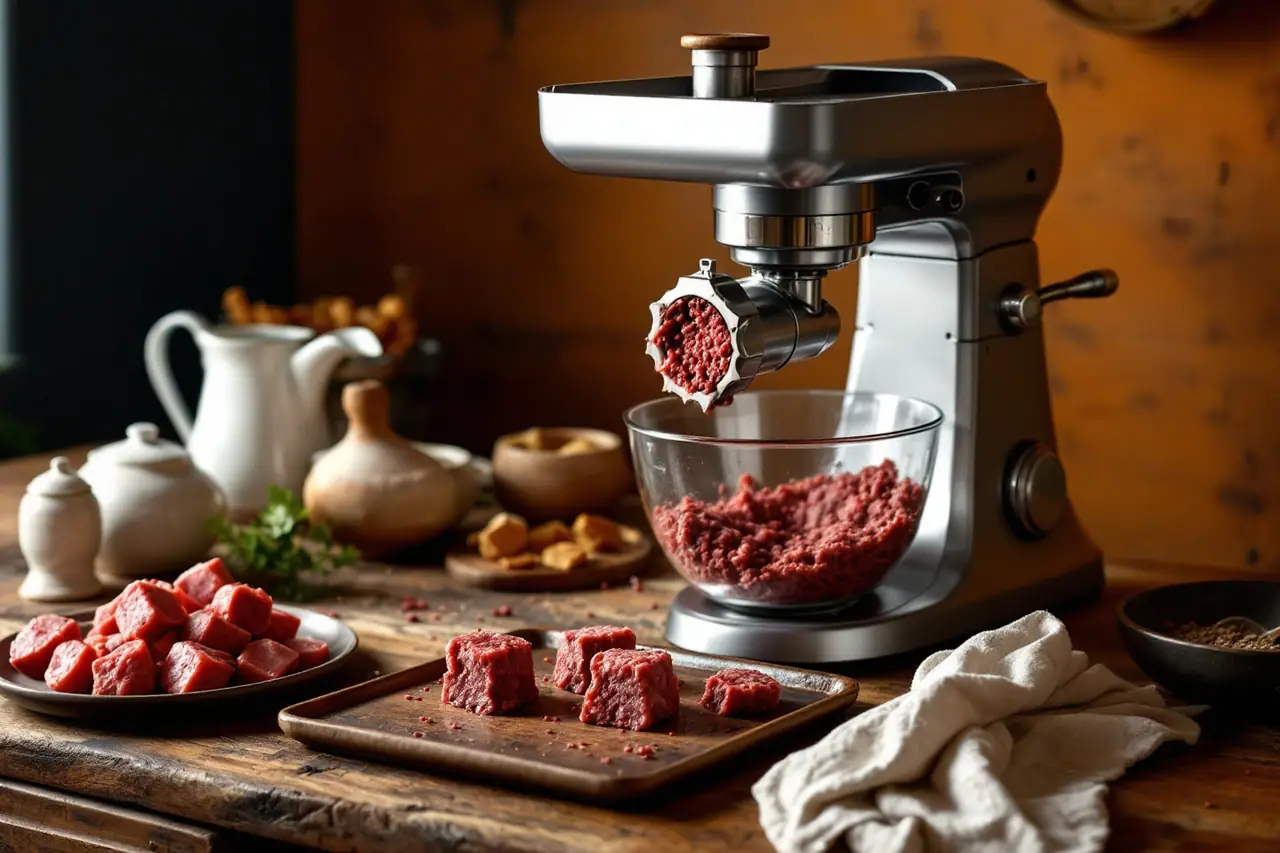
KitchenAid meat grinder attachment: grinding your own meatball mix
How a stand mixer grinder attachment works, which cuts to grind for meatballs, chilling and fat ratios, cleaning, and when a standalone meat grinder makes more sense.
Cook this one →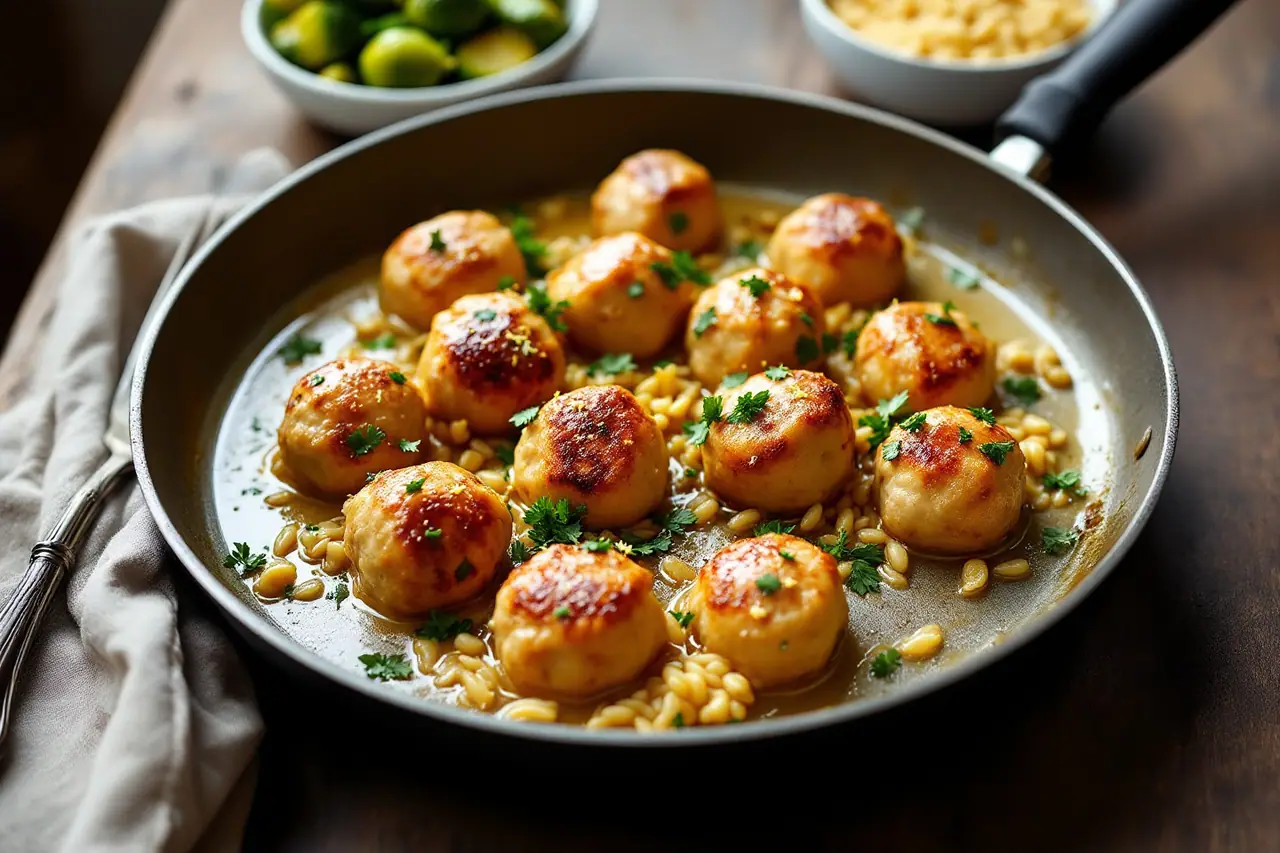
Chicken meatballs with lemon and parmesan, in a pan sauce
Tender chicken meatballs with lemon zest, garlic, parsley and parmesan, roasted hot and tossed in a quick lemon butter sauce. Weeknight timings and lunchbox leftovers.
Cook this one →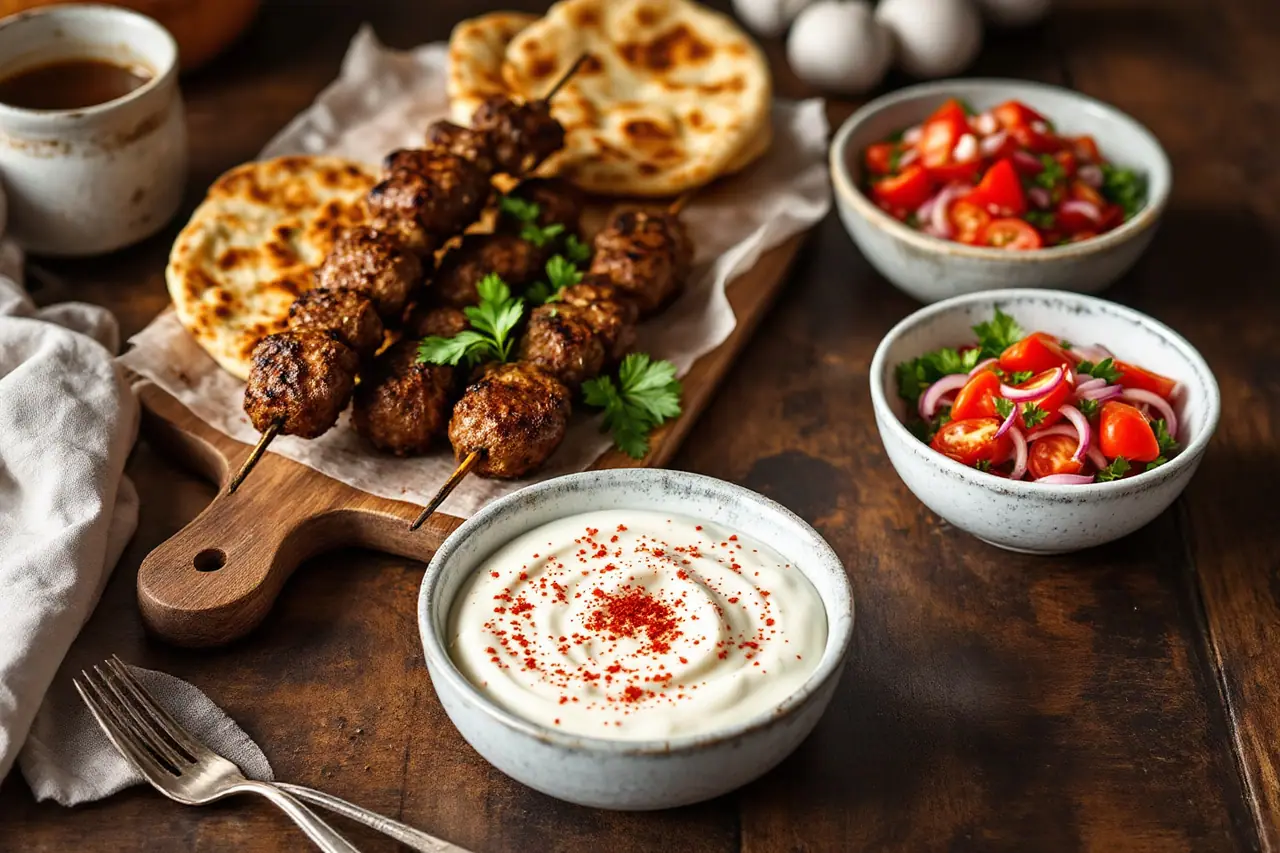
Lamb kofta with garlic yogurt, grilled or broiled
Spiced lamb kofta with onion, herbs, cumin and a little cinnamon, pressed onto skewers or rolled into balls, grilled or broiled, with a cool garlic yogurt sauce.
Cook this one →