
St. Louis toasted ravioli: the Hill's fried pasta, made at home
Toasted ravioli from St. Louis: where the Hill's breaded, fried meat ravioli came from, what makes a crisp one, and a home recipe with warm marinara.
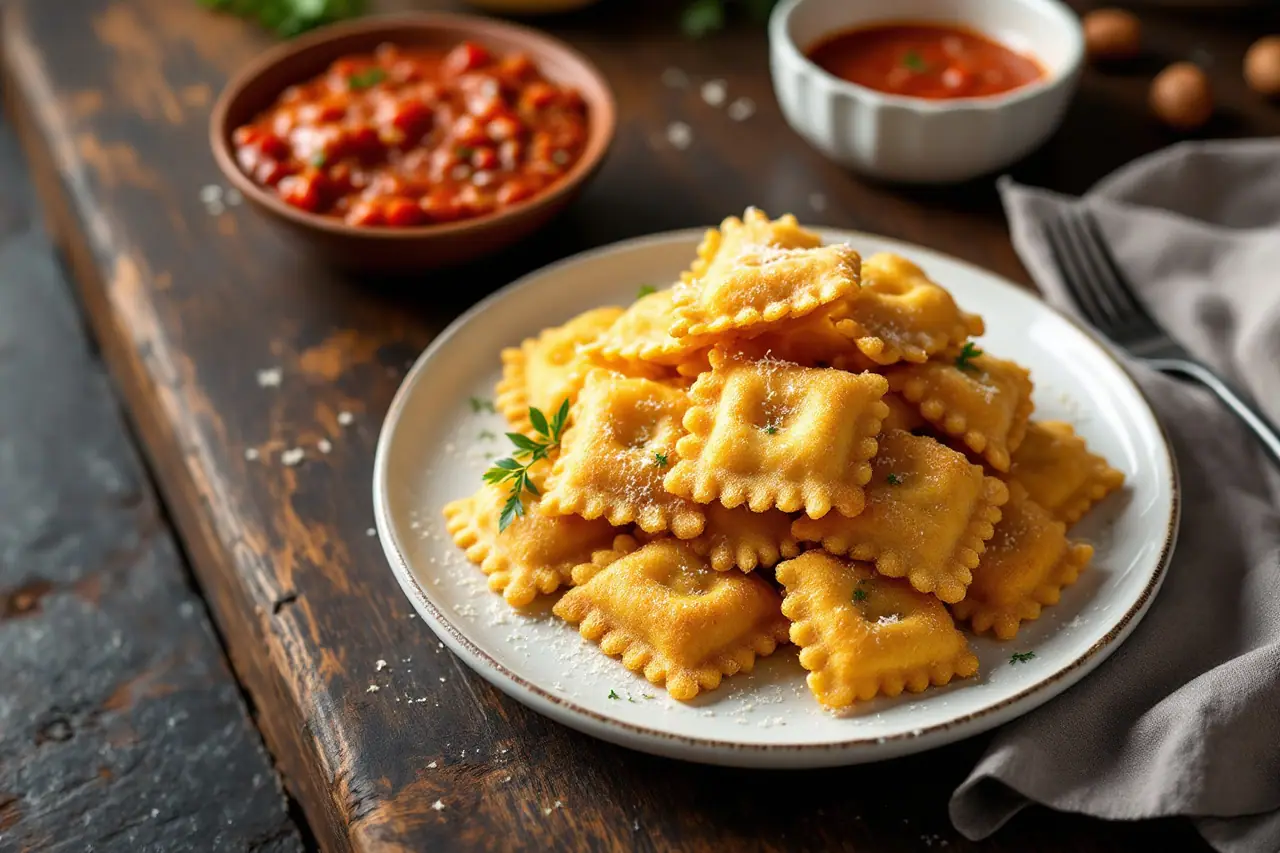
Toasted ravioli is the snack St. Louis puts in front of visitors before they have their coats off: square meat ravioli, breaded, fried until the pasta blisters, dusted with parmesan and dunked in warm marinara. Locals call them t-ravs. Nearly every story about them starts on the Hill, the city's Italian-American neighborhood, where the family-run places that still bread them by hand now win new customers through a search box as often as by word of mouth, and some lean on Missouri firms like missouriseo.company to show up there. You do not need a plane ticket to eat them, though. Here is where they came from, what separates a crisp one from a greasy one, and how I make them at home.
Where toasted ravioli came from
The Hill sits on high ground just south of Forest Park. It filled up in the early 1900s with immigrants, many from northern Italy, who worked in the clay mines and brickworks nearby, and it still reads as one of the largest Little Italy neighborhoods in the country. The fire hydrants are painted red, white and green. Yogi Berra and Joe Garagiola grew up on the same street there.
Most accounts put the birth of toasted ravioli on the Hill in the early 1940s, and most of them involve an accident. The best known version says a cook at a place called Angelo's, now Charlie Gitto's, dropped ravioli into hot oil instead of boiling water, and the result was good enough to keep. Another family, the Oldanis, has its own claim, and one telling says Louis Oldani picked the word "toasted" because it sounded nicer than "fried." Lombardo's, another St. Louis family business, says it was serving fried ravioli in the 1930s. Nobody is going to settle it, and the arguments are half the fun.
What is not in doubt is that the dish spread from the Hill to nearly every bar and pizza counter in the metro area, then to the freezer cases of grocery stores across the Midwest. If you are in town and want the real thing from the people who argue about it, Explore St. Louis keeps a list of where to eat toasted ravioli in St. Louis.
What makes a good one
A toasted ravioli is a fritter in a pasta coat, so the same rules apply as for any fried bite in the fritter kitchen: a dry surface, a coating that sticks, oil at the right heat, and a filling that is hot by the time the outside is brown.
The ravioli
St. Louis cooks mostly use meat ravioli, usually beef, sometimes beef and pork, with a little cheese. At home I use fresh refrigerated meat ravioli from the grocery store. They are thin enough to crisp and their filling is already cooked, so you only need to heat it through. Frozen ravioli work too, but thaw them in the fridge first; straight from the freezer they splatter and the middle stays cold while the outside darkens.
Homemade ravioli are lovely, and if you make pasta, go ahead. I would not make them just for this. The breading and the frying matter more than the pasta.
The coat
The classic coat is a dip in buttermilk or beaten egg, then Italian-seasoned breadcrumbs. I use both: buttermilk thinned with one egg. The buttermilk clings, the egg sets in the oil and glues the crumbs on. Plain dry breadcrumbs give the traditional fine, sandy crust. Panko gives a craggier crunch that some St. Louis people will tell you is wrong. Both taste good.
Set the station up in a line from left to right: ravioli, the wet dish, the crumbs, then a wire rack set over a sheet pan. Keep one hand for the wet dish and the other for the crumbs, or you will end up breading your own fingers. Press the crumbs onto the edges as well as the flat sides, because the crimped edge is where the oil finds its way in and where a bare patch shows up as a pale stripe after frying.
Bread the ravioli, lay them on a rack, and leave them for 10 minutes before frying. The coat dries a little and stays on in the oil instead of sliding off in sheets. This is the same trick I use for arancini from leftover risotto, and it works for the same reason.
The oil
Fry at 350°F (175°C) in a heavy pot with at least 2 inches (5 cm) of neutral oil. Too cool and the crumbs drink oil; too hot and the coat goes dark before the filling is warm. A clip-on thermometer is worth having. Fry in small batches so the temperature does not crash, and let it come back up between batches.
Air fryer or oven
You can make a decent oven or air fryer version. Spray the breaded ravioli well with oil on both sides, then cook at 400°F (200°C) until golden, turning once. The crust is lighter and drier than fried, closer to a baked cracker. The timing notes in my piece on air fryer meatballs versus the oven carry over: a crowded basket steams instead of browns.
The sauce
Serve them with warm marinara for dipping. Nothing fancy: a can of good crushed tomatoes simmered with garlic, olive oil, a pinch of oregano and salt for 20 minutes. A shower of finely grated parmesan over the hot ravioli and a little chopped parsley finish them. Some people swear by ranch dressing on the side. I have seen it done, and I let it go.
A worked example: toasted ravioli for a crowd
Say you are feeding 8 people as a starter before dinner. Plan on 5 or 6 ravioli each, so about 48. Grocery store packages of fresh ravioli vary, so count the pieces in yours; most hold somewhere between 20 and 30, which means 2 packages.
For 48 ravioli you need about 2 cups (480 ml) of the buttermilk and egg mixture and about 3 cups of breadcrumbs (330 g). In a 4 quart (4 liter) pot you can fry 6 to 8 at a time, about 3 minutes per batch with recovery time, so 7 batches take around 30 minutes. Bread everything first, rack it, then fry straight through and keep the finished ones in a 200°F (95°C) oven on a rack, not a plate, so the bottoms stay crisp. Make the sauce before you start breading.
The recipe
St. Louis toasted ravioli with warm marinara
- Makes
- About 24 ravioli, serves 4 as a starter
- Prep
- 35 min
- Cook
- 30 min
- Total
- 1 hr 5 min
Ingredients
Ravioli
- about 24 fresh refrigerated meat ravioli (or frozen, thawed in the fridge)
- 1 cup240 ml buttermilk
- 1 large egg
- 1 1/2 cups165 g Italian-seasoned dry breadcrumbs
- for frying neutral oil, at least 2 inches (5 cm) deep in the pot
Marinara
- 1 (28 oz) can1 (800 g) tin crushed tomatoes
- 2 tbsp30 ml olive oil
- 2 cloves garlic, sliced
- 1/2 tsp dried oregano
- 1/2 tsp1/2 tsp, about 3 g fine salt salt, plus more to taste
To serve
- 1/2 cup45 g finely grated parmesan
- 2 tbsp chopped parsley
Method
- Warm the olive oil and garlic in a saucepan over low heat until the garlic is pale gold, then add the tomatoes, oregano and salt and simmer gently for 20 minutes while you bread.
- Whisk the buttermilk and egg in a shallow dish and put the breadcrumbs in a second dish.
- Dip each ravioli in the buttermilk mixture, let the excess drip off, then press it into the crumbs on both sides and around the edges.
- Lay the breaded ravioli on a wire rack and leave them for 10 minutes so the coating sets.
- Heat the oil in a heavy pot to 350°F (175°C) and set a second rack over a sheet pan next to the stove.
- Fry 6 to 8 ravioli at a time, turning once, for 2 to 3 minutes until deep golden and the filling is steaming hot, 165°F (74°C) in the middle.
- Lift them onto the rack, sprinkle with parmesan at once, and let the oil come back to 350°F (175°C) before the next batch.
- Scatter with parsley and serve hot with the warm marinara for dipping.
Cook's notes
- For the air fryer, spray the breaded ravioli well with oil on both sides and cook at 400°F (200°C) for 7 to 9 minutes, turning once.
Variations
- Cheese ravioli: softer inside and just as good. Fry them a little less, since the cheese leaks if pushed.
- Spinach and ricotta: a nice change for a mixed platter.
- Sausage filling: if you make your own ravioli, a fennel sausage filling cooked to 160°F (71°C) before filling is very good.
- A spicy dip: stir a pinch of red pepper flakes into the marinara, or serve a second bowl of arrabbiata.
Making them ahead and freezing
Breaded, unfried ravioli freeze well. Lay them on a parchment-lined tray without touching, freeze until hard, then bag them. Fry from frozen at the same temperature, adding about a minute, and check that the middle reaches 165°F (74°C). The same tray method I describe in freezing meatballs raw or cooked works here.
Fried leftovers keep in the fridge for 3 to 4 days. Reheat them on a rack in a 375°F (190°C) oven or in the air fryer until hot through, never in the microwave, which turns the crust to wet cardboard.
Questions people ask
Are toasted ravioli actually toasted?
No. They are deep-fried. The name is the St. Louis way of saying it, and it stuck.
Can I use wonton wrappers instead of pasta?
You can make little filled squares with wonton wrappers and they fry beautifully, but the result is thinner and more like a crisp dumpling than the chewy pasta of the original.
Why did my breading fall off?
Usually the ravioli went into the oil straight after breading, or the oil was too cool. Rest them on a rack for 10 minutes and fry at 350°F (175°C).

Gianna Russo
Gianna grew up rolling meatballs at a crowded Sunday table in New Jersey and still makes the sauce the long way when she has an afternoon free. She writes the Italian-American pieces here: polpette, arancini, ricotta, grinding your own mix and the sauces that hold it all together.
Cook next
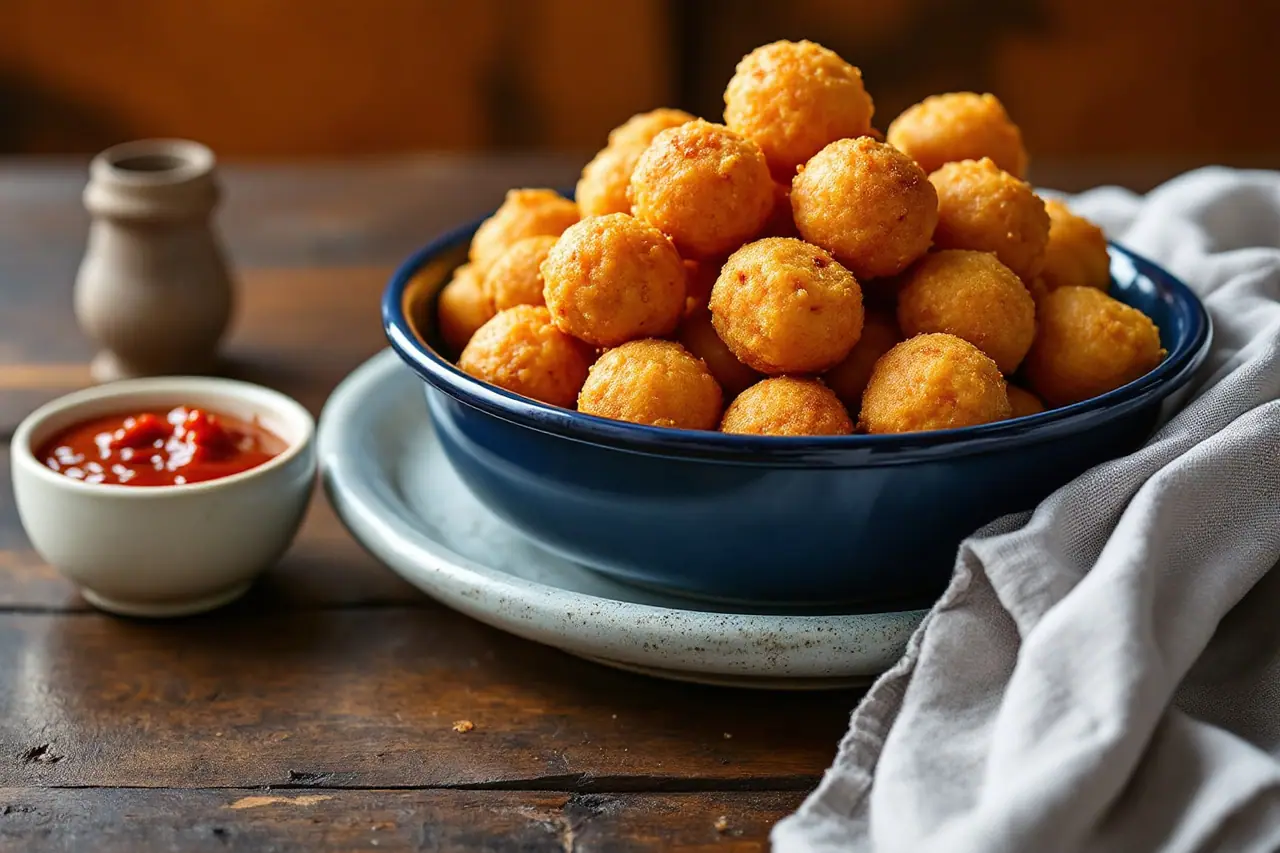
Akara: crisp black-eyed pea fritters, the way my mother made them
Light, crisp akara made from peeled black-eyed peas whipped with onion and hot pepper, fried by the spoonful. How to peel the beans, whip the batter and serve them.
Cook this one →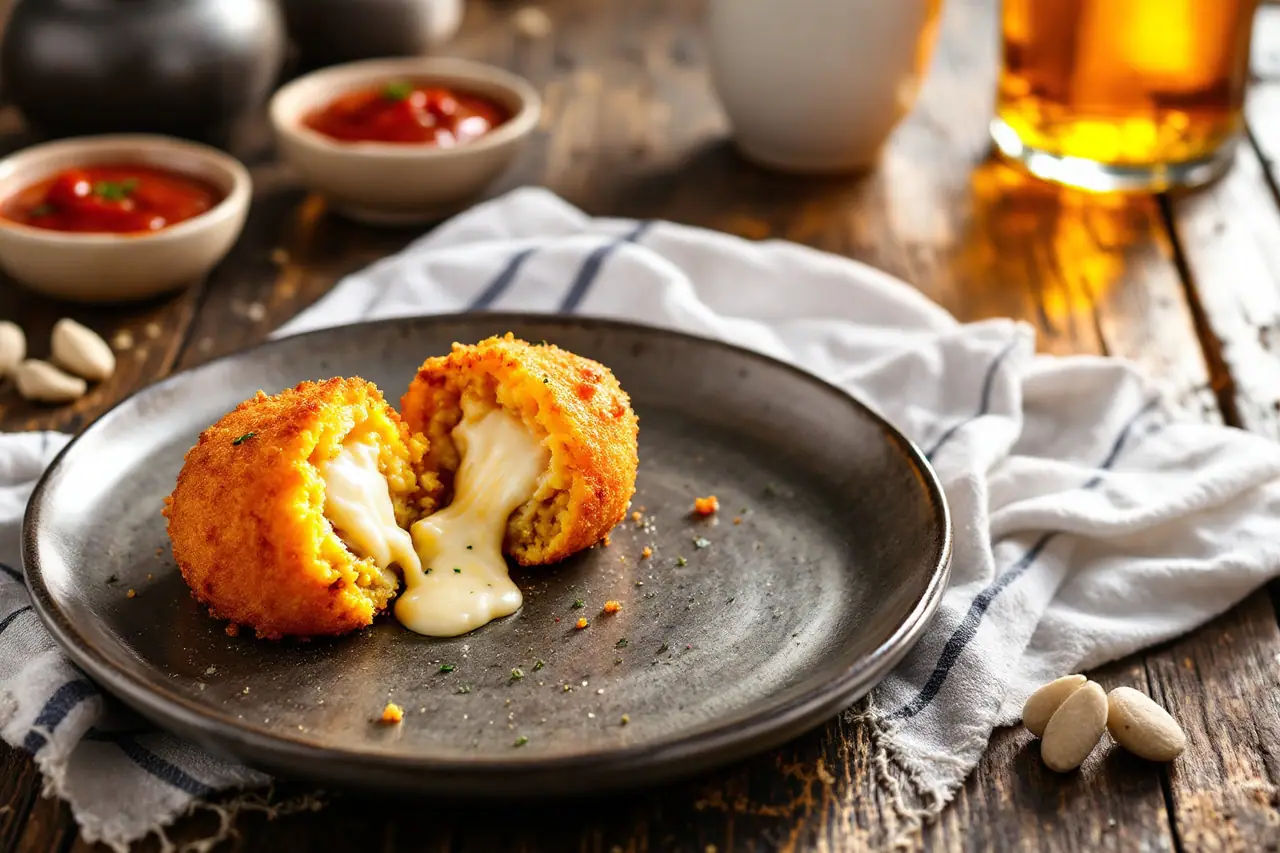
Arancini from leftover risotto, with a melting middle
Sicilian-style rice balls made from cold risotto, stuffed with mozzarella or ragù, rolled in breadcrumbs and fried crisp, plus a baked version and a quick risotto.
Cook this one →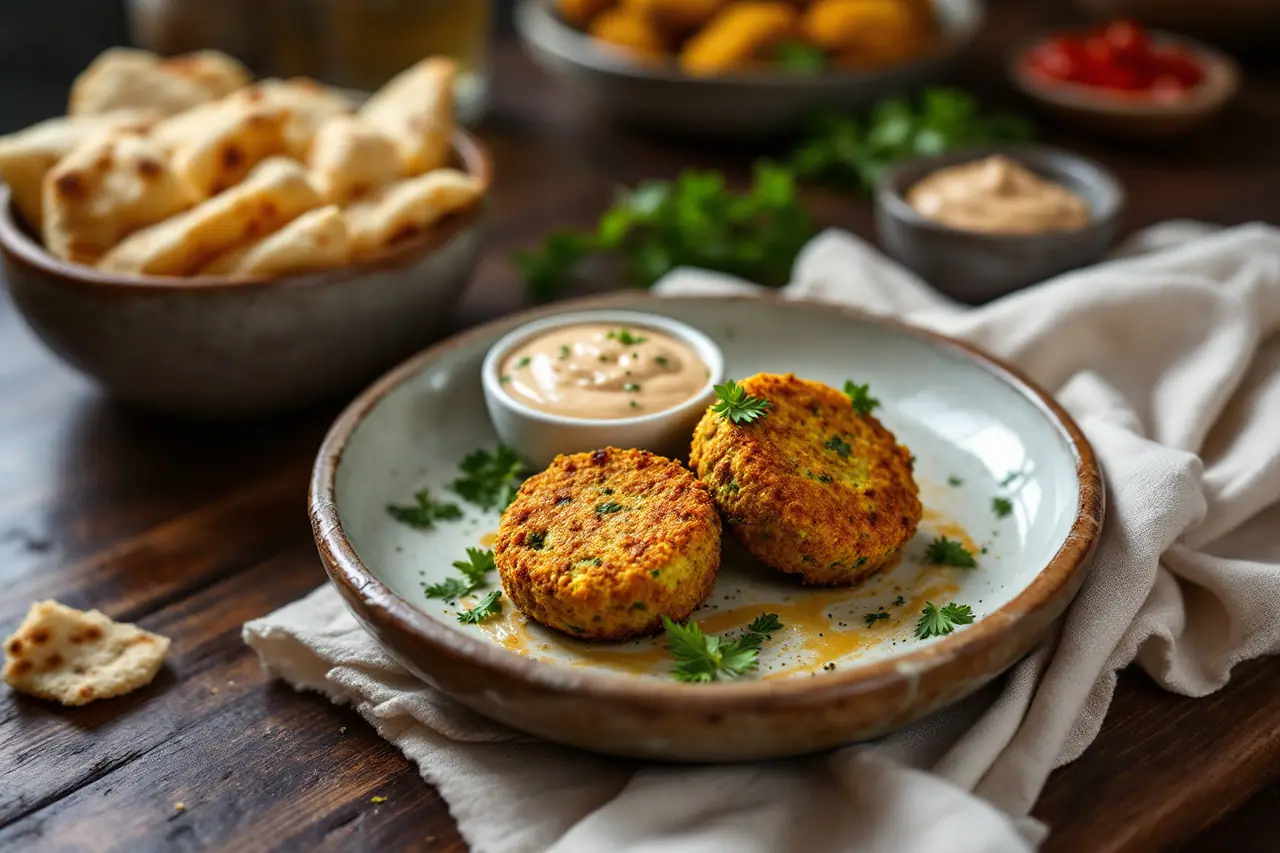
Falafel recipe from dried chickpeas, fried or baked
Crisp, green-flecked falafel made the traditional way from soaked dried chickpeas and herbs, with a deep-fried method, an oven version, and tahini sauce.
Cook this one →